
The 2026 Iran War has effectively ended the operational life of Iran’s ageing but iconic air force fleet, including the last flying examples of the Grumman F 14 Tomcat. Coalition strikes on Iranian airbases have systematically destroyed military aircraft on the ground, while the limited number of sorties Iran managed to launch demonstrated both the courage of its pilots and the obsolescence of their equipment.
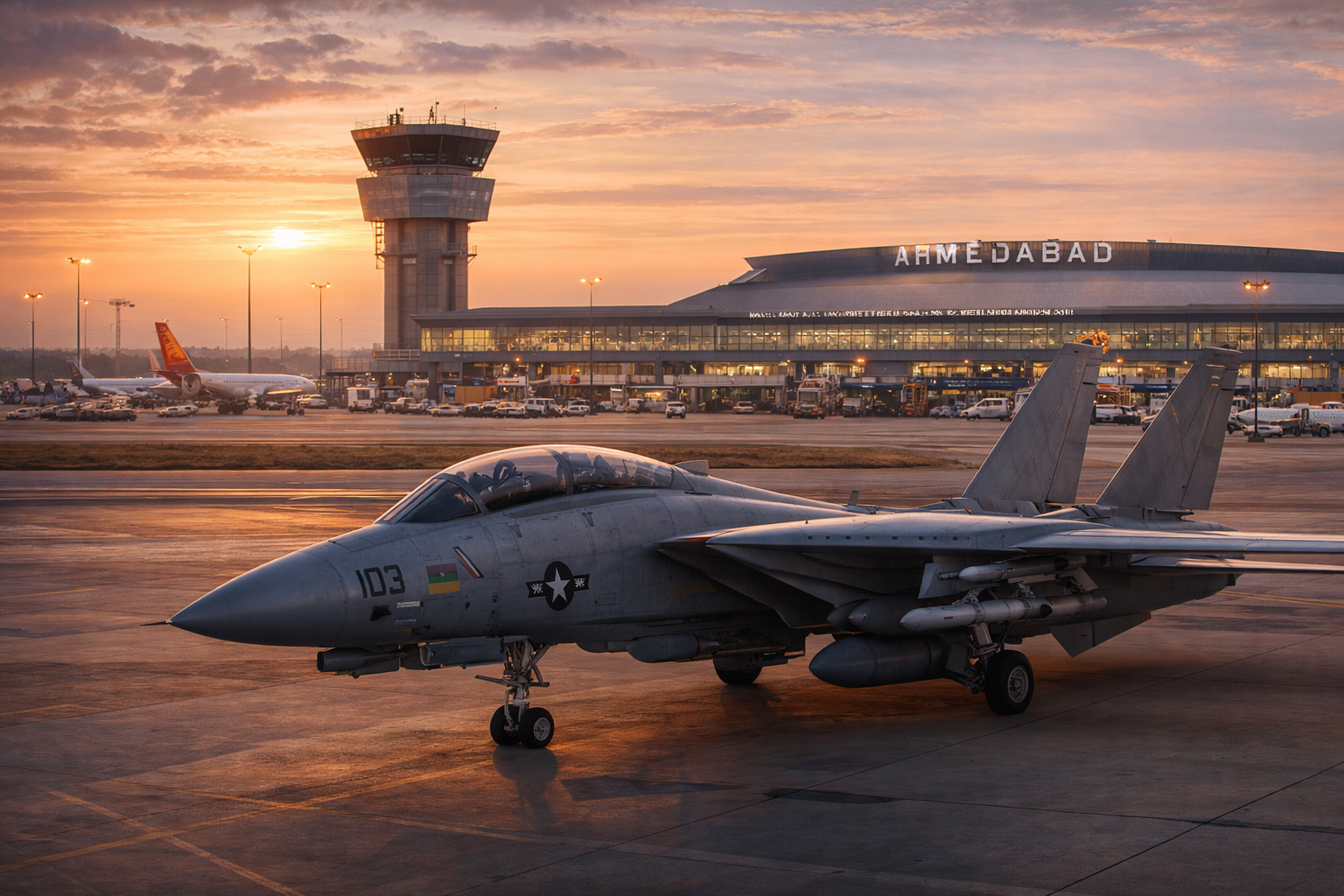
Iran has operated the F 14A Tomcat since the late 1970s, when the Shah’s government purchased 80 aircraft from the United States. Despite decades of sanctions that cut off access to spare parts, Iranian engineers maintained a small fleet operational through remarkable ingenuity, reverse engineering components and cannibalising retired airframes. The aircraft had become a symbol of Iranian aerospace self reliance.
That era came to a definitive close when USAF strikes specifically targeted F 14 Tomcats at airbases across the country. CENTCOM confirmed the destruction of multiple examples, ending what had been the longest continuous operational service of any Tomcat variant in the world. Aviation historians and enthusiasts worldwide noted the passing of the type from active military service.
The most surprising Iranian aerial engagement involved the Yakovlev Yak 130 Mitten, a Russian designed advanced jet trainer that Iran had acquired to modernise its pilot training pipeline. On 4 March, an Iranian Yak 130 was scrambled over Tehran, only to be intercepted and shot down by an Israeli F 35I Adir. The engagement, which took place at low altitude near Latyan Dam, illustrated the desperation of Iran’s air defence posture. The Yak 130, while capable of carrying limited ordnance, was never designed as a frontline combat aircraft and was hopelessly outmatched by the stealth fighter.
Additional Iranian aircraft losses included Su 22M4 Fitter ground attack aircraft destroyed at Shiraz Shahid Dastgheib Airport and Su 24MK Fencer bombers eliminated at Qasem Soleimani International Airport in Ahvaz. At the latter location, CENTCOM footage also showed damage to two likely non operational Fokker F27 400M Friendship airframes, suggesting that even decommissioned aircraft were not spared in the comprehensive campaign against Iranian air assets.
The destruction of Mehrabad International Airport on 7 March represented perhaps the most dramatic single aviation loss event of the conflict. Israeli aircraft attacked the facility, destroying 17 aircraft on the ground. Among those lost were a Harbin Y 12II utility transport, three Boeing 747 200M combi aircraft and three Ilyushin Il 76MD heavy transport aircraft. These losses struck at Iran’s strategic airlift capability, severely limiting the regime’s ability to move military supplies and personnel.
The IDF also confirmed the destruction of the Supreme Leader’s official aircraft at Mehrabad, an act carrying both military and symbolic significance. The aircraft had been used by senior Iranian officials for international travel.
Iran’s air force, once the most capable in the region, has been reduced to a shadow force. With its aircraft destroyed, airbases cratered and air defence systems degraded, the Islamic Republic of Iran Air Force faces a generation long rebuilding task, assuming the political conditions for such reconstruction ever materialise.