

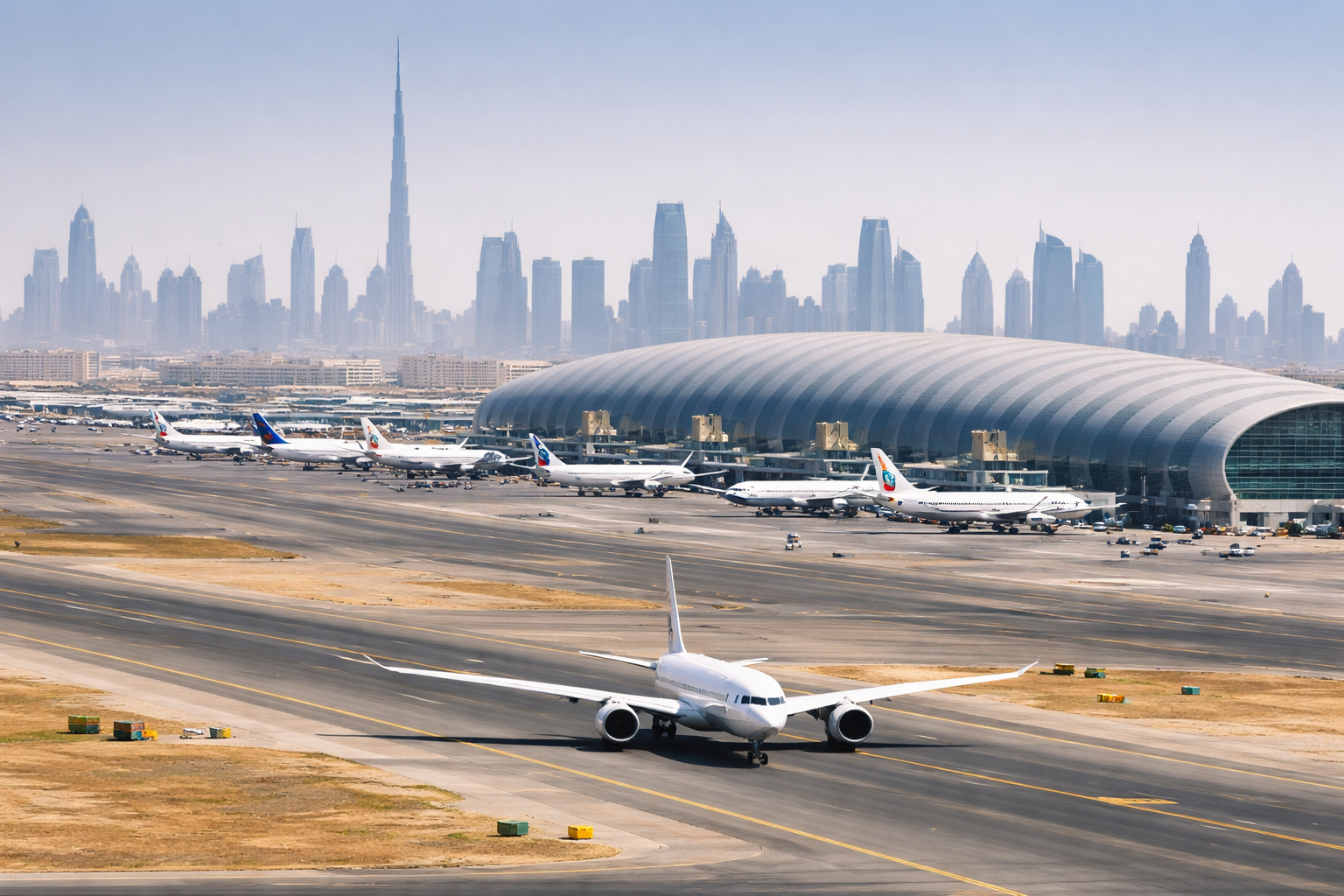
A Critical Aviation Hub Faces Sudden Disruption
Aviation operations across one of the world’s busiest air travel hubs experienced unexpected disruption following a drone-related incident reported near Dubai International Airport. While authorities acted swiftly to stabilize the situation, the event highlighted how sensitive global aviation networks remain to developments in strategically important regions.
Dubai International Airport plays a vital role in connecting Asia, Europe, and Africa. Even short interruptions at such a major hub can create ripple effects across international flight networks, affecting airlines, passengers, and cargo operations worldwide.
Immediate Operational Response
Air traffic management teams implemented precautionary measures to ensure safety. Temporary restrictions were introduced to allow authorities to assess the situation and maintain safe separation between aircraft.
During this period, airlines adjusted operations in real time. Some flights entered holding patterns, while others were redirected to nearby airports. Departures were also briefly affected as operations were managed and gradually restored.
These actions reflect standard aviation safety procedures, designed to minimize risk while maintaining operational continuity.
Impact on Airlines and Flight Schedules
Airlines operating through Dubai had to coordinate rapidly with pilots, operations centers, and ground teams. Flights approaching the region adjusted their arrival strategies, while departures experienced minor delays.
Although the disruption was temporary, it demonstrated how even localized incidents can influence global airline schedules—especially in high-traffic regions such as the Middle East.
Airlines rely on precise timing and coordination, and even short interruptions at a major hub can affect multiple routes across continents.
Global Ripple Effects Across Aviation Networks
Dubai’s role as a global transit hub means that operational disruptions extend beyond the region itself. Flights connecting through the airport form part of broader airline networks linking cities across Asia, Europe, and beyond.
When delays occur at a central hub, they can affect:
- connecting passengers
- aircraft rotations
- crew scheduling
This interconnected structure means that even brief disruptions can influence aviation operations far beyond the immediate area.
Safety Systems in Action
The response to the drone incident highlights the strength of aviation safety systems. Modern airports and air traffic control networks are equipped to handle unexpected situations through well-established protocols.
These include:
- rapid communication between aircraft and control towers
- coordination with security authorities
- dynamic adjustment of flight paths
Such systems ensure that safety remains the top priority at all times.
Growing Focus on Airspace Security
Incidents involving drones near airports have become an increasing area of focus for the aviation industry. While drones provide valuable commercial and recreational applications, their presence near controlled airspace requires strict monitoring and regulation.
Airports worldwide are investing in:
- detection systems
- monitoring technologies
- updated regulatory frameworks
The situation near Dubai reinforces the importance of maintaining secure airspace around major aviation hubs.
Passenger Experience and Communication
For passengers, the disruption was managed with minimal inconvenience. Airlines provided timely updates through mobile apps, announcements, and customer service channels.
Most delays were short, and normal operations resumed quickly. Airports like Dubai are designed to handle high volumes of traffic and unexpected situations, allowing them to maintain service quality even during operational adjustments.
Industry Resilience
The aviation industry’s response demonstrates its resilience and adaptability. Airlines, airports, and aviation authorities worked together to ensure that disruptions were managed efficiently.
Despite the temporary impact, global air travel continued to operate smoothly, supported by strong infrastructure and coordinated systems.
Looking Ahead
As aviation continues to evolve, managing emerging challenges such as drone activity will remain a priority. Authorities are expected to strengthen monitoring systems and enhance coordination to prevent similar incidents in the future.
The focus remains on maintaining safety while ensuring uninterrupted connectivity across global air routes.
Conclusion
The drone-related incident near Dubai International Airport serves as a reminder of how interconnected and responsive global aviation systems are.
While the disruption was temporary, its effects highlighted the importance of rapid response, strong safety frameworks, and continuous coordination across the aviation industry.
Through preparation, technology, and collaboration, global aviation continues to adapt—ensuring that passengers and cargo move safely across the world’s busiest skies.