
Southeast Asian Airlines Navigate Operational Adjustments
Airlines across Southeast Asia play a vital role in connecting regional and international travel markets, particularly on long-haul routes linking Asia with Europe. Developments affecting airspace in parts of the Middle East, including Iran, have introduced new operational considerations for these carriers as they adjust routing strategies and manage long-distance operations.
For airlines based in Malaysia, Singapore, Thailand, Indonesia, and Vietnam, maintaining efficient connectivity to Europe is an important part of their international network. As routing conditions evolve, these airlines are adapting their operations while continuing to prioritize safety, efficiency, and passenger experience.
Importance of Europe Routes for Southeast Asia
Europe remains a key long-haul destination for Southeast Asian airlines. Routes connecting cities such as:
- Kuala Lumpur
- Singapore
- Bangkok
- Jakarta
to major European hubs like:
- London
- Frankfurt
- Paris
- Amsterdam
form a significant part of airline networks.
These routes support tourism, business travel, and trade connections between the regions. Traditionally, many of these flights pass through Middle Eastern airspace due to its geographic efficiency.
When airlines adjust these routes, even slightly, the operational impact can extend across scheduling, fuel planning, and aircraft utilization.
Operational Challenges for Southeast Asian Carriers
Longer Flight Paths
One of the most direct impacts of airspace adjustments is the potential for longer routing. Flights may be redirected through alternative corridors, increasing total flight distance.
For Southeast Asian airlines operating ultra-long-haul routes, this can result in:
- extended flight times
- increased fuel consumption
- adjustments to flight planning
While the changes may appear modest on a single flight, the cumulative effect across daily operations can be significant.
Fleet Utilization
Aircraft used on long-haul routes must be carefully scheduled across multiple destinations. Changes in flight duration can affect:
- turnaround times at airports
- aircraft rotation across routes
- maintenance planning
Airlines must manage these factors to ensure network stability.
Crew Scheduling
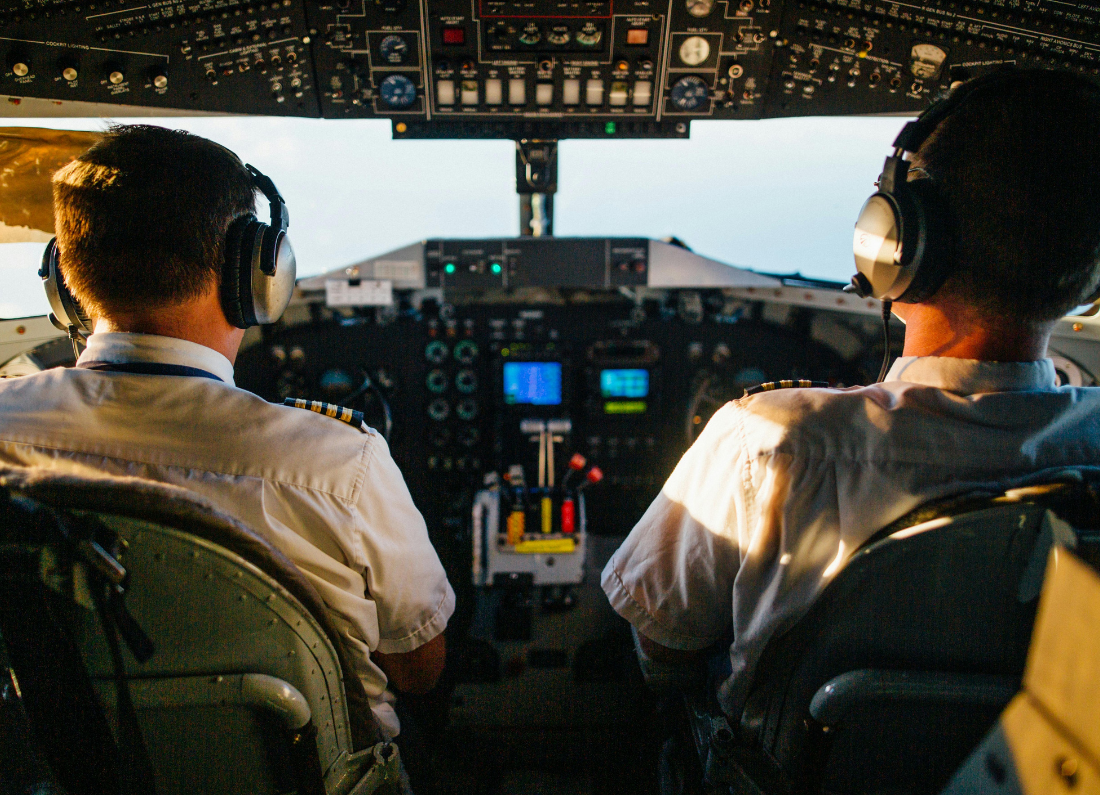
Flight crew operations are governed by strict duty time regulations. Longer routes may require:
- additional crew members
- adjusted duty schedules
- rest planning for long-haul flights
These considerations add complexity to airline operations.
How Airlines Are Adapting
Southeast Asian airlines have demonstrated strong adaptability in responding to changing operational conditions.
Use of Modern Aircraft
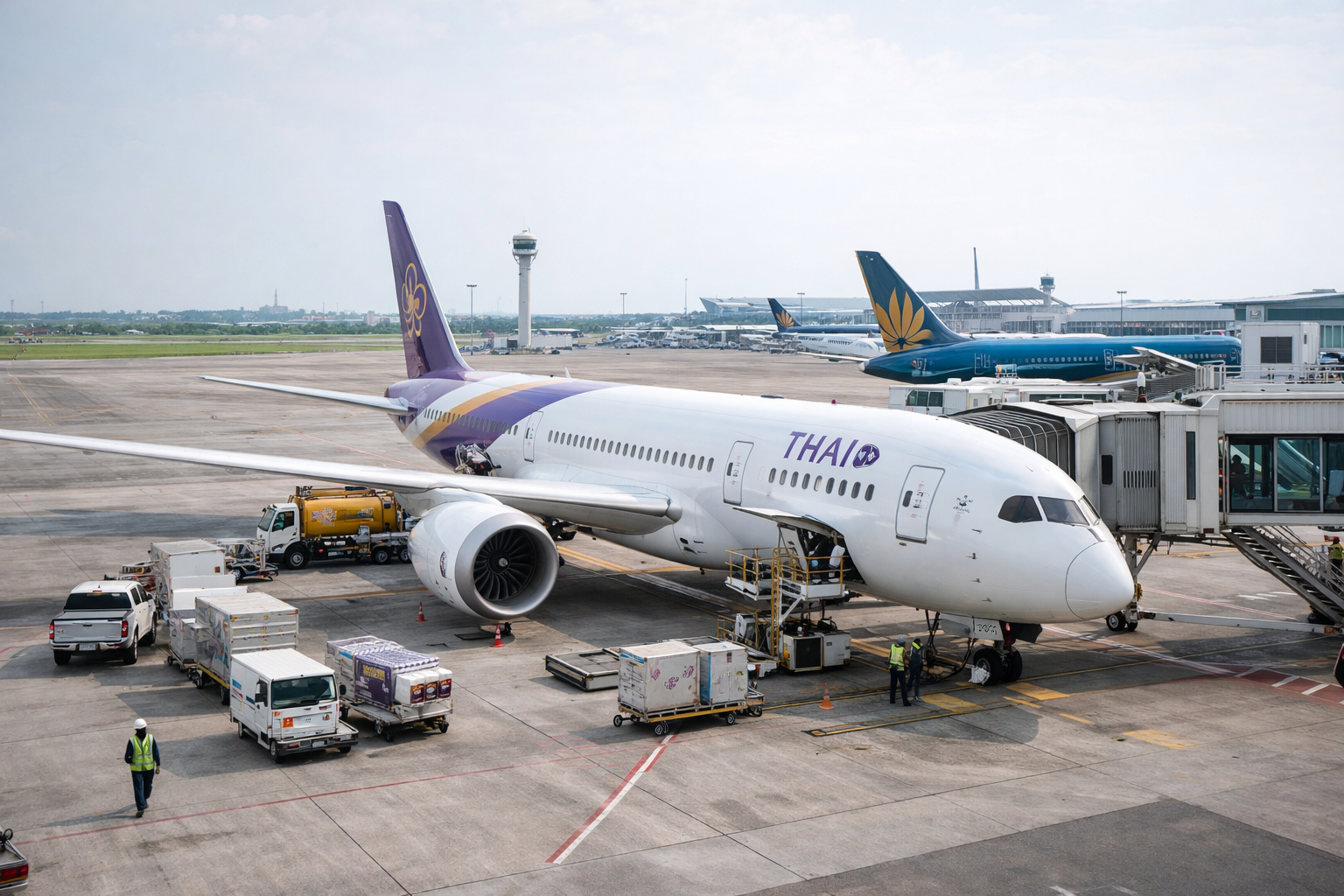
Many airlines in the region operate advanced aircraft such as:
- Airbus A350
- Boeing 787 Dreamliner
- Boeing 777
These aircraft are designed for long-haul efficiency and provide greater flexibility in route planning.
Their extended range capabilities allow airlines to operate alternative routes while maintaining performance.
Advanced Flight Planning
Airlines rely on sophisticated flight planning systems to evaluate routing options in real time. These systems consider:
- weather conditions
- air traffic flow
- fuel efficiency
- aircraft performance
By analyzing multiple variables, airlines can identify the most efficient available route.
Network Optimization
Airlines may also adjust schedules or frequencies to maintain operational balance. This includes:
- optimizing departure times
- coordinating connecting flights
- maintaining passenger convenience
These adjustments help ensure continuity across airline networks.
Passenger Experience and Market Impact
From a passenger perspective, the impact of these operational changes is often minimal.
Travelers may experience:
- slightly longer flight durations
- minor schedule adjustments
However, airlines work to ensure that service quality remains consistent.
Passenger demand between Southeast Asia and Europe continues to be strong, driven by tourism, business travel, and global connectivity.
Airlines remain focused on maintaining reliable services while adapting to operational conditions.
Role of Regional Aviation Hubs
Major Southeast Asian airports such as:
- Kuala Lumpur International Airport (KLIA)
- Singapore Changi Airport
- Bangkok Suvarnabhumi Airport
serve as key hubs for long-haul travel.
These airports support large volumes of international traffic and play an important role in connecting passengers to global destinations.
Operational adjustments by airlines may influence scheduling at these hubs, but infrastructure and capacity remain strong.
Industry Resilience in Southeast Asia
The aviation industry in Southeast Asia has demonstrated resilience in recent years, adapting to a wide range of challenges including demand fluctuations and operational changes.
Airlines in the region are well-positioned to respond to evolving airspace conditions through:
- modern fleet capabilities
- advanced operational systems
- strong regional connectivity
These strengths support continued growth and stability.
Looking Ahead
As developments in the Middle East continue to be monitored, Southeast Asian airlines are expected to maintain flexible operational strategies.
The region’s aviation sector remains one of the fastest-growing globally, supported by increasing passenger demand and ongoing infrastructure investment.
While airspace adjustments introduce additional considerations, airlines continue to adapt effectively while maintaining safe and efficient operations.
Conclusion
The evolving airspace situation involving Iran highlights the interconnected nature of global aviation and its impact on regional carriers.
For Southeast Asian airlines, the ability to adjust routes, optimize operations, and maintain service quality demonstrates the strength and resilience of the region’s aviation industry.
As global travel continues to expand, these airlines will remain key players in connecting Asia with Europe and beyond.