


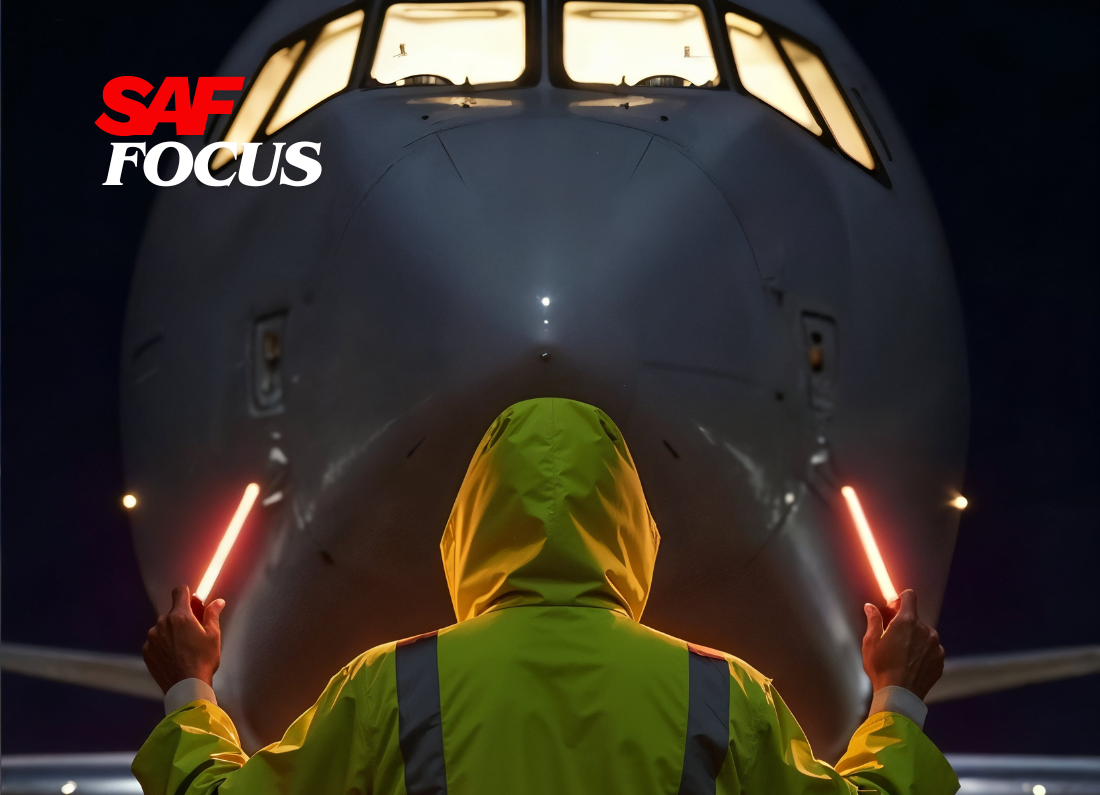
Sustainability has become one of aviation’s loudest commitments. Airlines, governments, and manufacturers across Asia have announced ambitious carbon-reduction targets, placing Sustainable Aviation Fuel (SAF) at the centre of the industry’s green transition.
Yet behind the announcements lies a hard truth: Asia is not ready to scale SAF at the pace required.
Big Promises, Limited Supply
SAF production remains extremely limited in Asia. While pilot projects and small-scale facilities exist, regional supply accounts for only a fraction of global SAF output.
Key challenges include:
- Lack of large-scale SAF refineries
- Limited feedstock availability
- High production and logistics costs
- Competition with other biofuel industries
As a result, most Asian airlines rely on imported SAF, making widespread adoption economically unrealistic.
The Cost Barrier for Airlines
SAF currently costs two to five times more than conventional jet fuel. For airlines already under pressure from rising fuel prices, leasing costs, and aircraft delays, absorbing SAF premiums is extremely difficult.
Low-cost carriers, which dominate Asian skies, face the toughest challenge. Their price-sensitive customers leave little room to pass additional costs onto ticket prices.
Policy Gaps Across the Region
Unlike Europe, Asia lacks a unified regulatory framework for SAF adoption. Policies vary widely from country to country, creating uncertainty for investors and producers.
Without:
- Clear mandates
- Long-term incentives
- Stable pricing mechanisms
SAF production in Asia struggles to attract the capital needed for expansion
Airlines Caught in a Sustainability Dilemma
Asian airlines are under growing pressure from:
- International environmental commitments
- Corporate travel sustainability requirements
- Investor and public expectations
At the same time, limited SAF availability means airlines must rely heavily on fleet modernisation, operational efficiency, and carbon offsetting to meet near-term sustainability goals.
A Regional Opportunity Still Untapped
Despite current challenges, Asia holds long-term potential:
- Abundant biomass resources
- Strong refining and petrochemical expertise
- Growing aviation demand
With the right policy support, Asia could become a major SAF producer, not just a consumer.
Sustainable Aviation Fuel remains aviation’s most promising pathway to decarbonisation, but in Asia, ambition currently outpaces reality. Until production scales up and costs come down, SAF will remain a strategic goal rather than an operational solution.
For Asia’s aviation industry, the path to sustainability will be gradual, built on realistic timelines, coordinated policy, and long-term investment, not just bold announcements.








Leave a Reply