


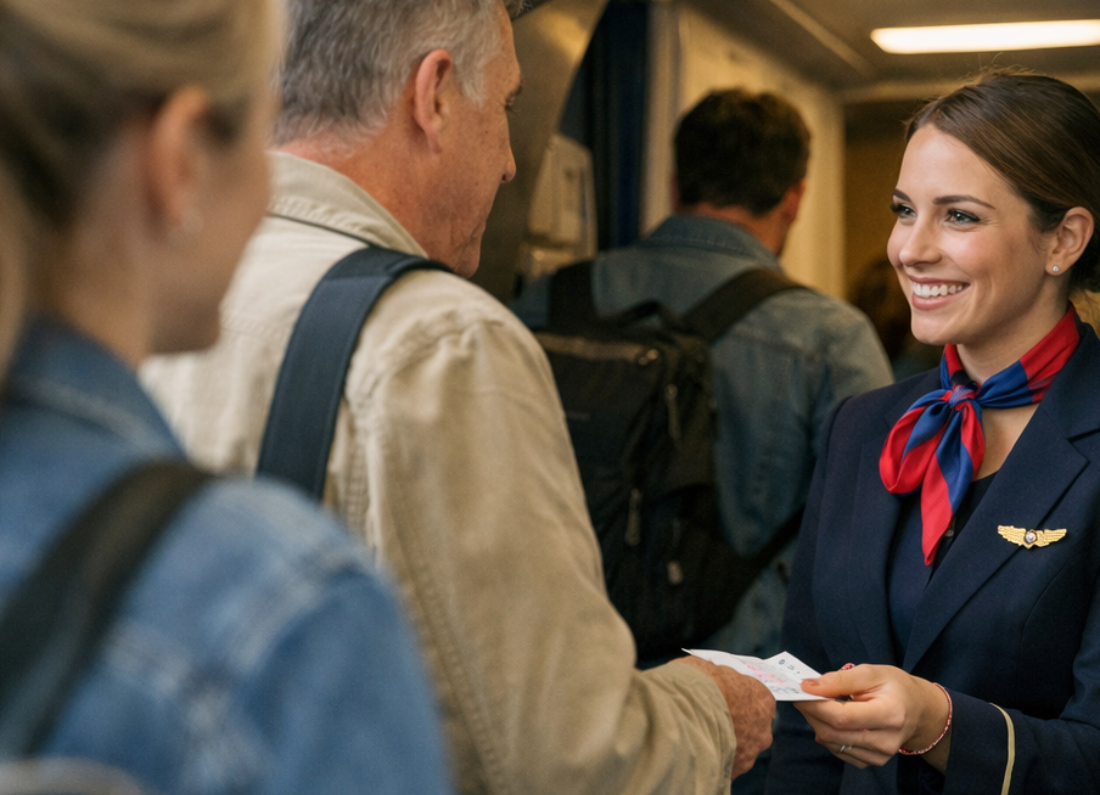
he majority of travellers believe that boarding is a straightforward process that entails a friendly smile, a greeting at the door, and a walk to the designated seat. However, those initial moments provide crucial insight into the safety, comfort, and general dynamics of the upcoming journey for cabin crew. Their observations are based on a carefully calibrated safety culture that has developed over decades of international aviation practice rather than on judgement. Gaining insight into what they observe allows one to better appreciate the professionalism that underpins each flight.
As soon as the first passenger enters the aircraft, cabin crew members start evaluating the cabin environment. They start by identifying those who might need more help. In order to provide proactive support, passengers who have mobility issues, are elderly, pregnant, or recovering from an injury are discreetly noted. In situations like turbulence, medical emergencies, or the improbable event of an evacuation, where seconds can make all the difference, this early awareness becomes crucial.
Additionally, they watch passengers who seem nervous or unaccustomed to flying. A first-time passenger or someone who is uncomfortable flying may be identified by hesitancy at the door, anxious looks, or trouble finding a seat. During the safety demonstration, crew members frequently react with assurance, kind direction, or extra care. These minor adjustments contribute to the maintenance of a serene cabin environment, which is crucial for both service flow and safety.
Another important but subtle thing to think about is shoes and clothes. Fashion is a way for people to express themselves, but some choices can make emergency procedures more difficult. You can’t wear high heels or tight clothes when you use an evacuation slide, and open-toed shoes make it easier to get hurt on cabin floors. Crew members should not act like police officers, but they should be ready for problems that might come up in an emergency. Because they are aware, instructions can be changed quickly and in the right way if necessary.
At the same time, the cabin crew looks for passengers who might be able to help in an emergency. When something unexpected happens, pilots, engineers, medical professionals, and uniformed personnel who are off duty can be very helpful. Crew members can tell who might be able to help with medical emergencies, technical assessments, or security-related incidents by seeing a lanyard, a professional badge, or just mentioning their job. This practice comes from real-life aviation history, where trained passengers have been very important in keeping emergencies under control.
Behavioural cues are just as important. Crew members are taught how to spot signs of drunkenness, agitation, or disruptive behaviour long before they get worse. If passengers are speaking in a slurred way, using an aggressive tone, or acting strangely with each other, it could be a sign of a possible risk. Modern safety rules also say that crew members must always be on the lookout for signs of human trafficking or coercion. They follow international rules when they make their observations and keep them to themselves. This makes sure that people who are vulnerable get the right care without losing their privacy or dignity.
The way people act with their carry-on bags gives us more information. When there is turbulence or an evacuation, passengers who are having trouble with heavy bags may need help. Big things can block aisles or exits, and bags that aren’t stored properly can be dangerous when the plane suddenly moves. Stowing things away in an efficient way is not just a matter of convenience. It is a basic safety rule that keeps everyone on board safe.
These observations, though subtle, form the backbone of cabin safety. As aircraft technology advances and passenger volumes grow, the human element remains irreplaceable. Cabin crew continue to serve as the first line of defence, balancing vigilance with hospitality. Their ability to read a cabin, anticipate needs, and respond with professionalism reflects the depth of training behind every uniform. For passengers, recognising this unseen work fosters respect for the safety ecosystem that makes modern aviation possible.

Leave a Reply