
A Journey Through Changing Skies: How Airspace Adjustments Are Shaping Passenger Travel
At first glance, the journey seems like any other. A traveler arrives at the airport, checks in, passes through security, and waits at the gate. The aircraft boards on time, the cabin crew welcomes passengers, and the flight departs smoothly into the sky.
Yet behind this routine experience, subtle changes are taking place. As airlines adjust flight paths across parts of the Middle East, including areas involving Iran, the journey between Asia and Europe is evolving in ways most passengers may not immediately notice—but may quietly feel.
Somewhere high above the clouds, the aircraft follows a route that may differ slightly from what it once was. Instead of taking the most direct path, the flight may arc a little further north or south, guided by careful planning and real-time coordination between pilots, airline operations teams, and air traffic controllers.
To passengers, this shift is almost invisible. But on the in-flight screen, the map tells a quiet story—one of adaptation, precision, and the constant movement of global aviation systems adjusting to changing conditions.
For many travelers, the first noticeable change comes not in the air, but in time. A flight that once took 12 hours might now take a little longer. An arrival time might shift slightly. A connection might feel a bit tighter—or more relaxed—depending on the route.
These changes are often small—sometimes just a few extra minutes, occasionally longer. Airlines work carefully to ensure that adjustments remain minimal, preserving the overall rhythm of travel while adapting to new routing realities.
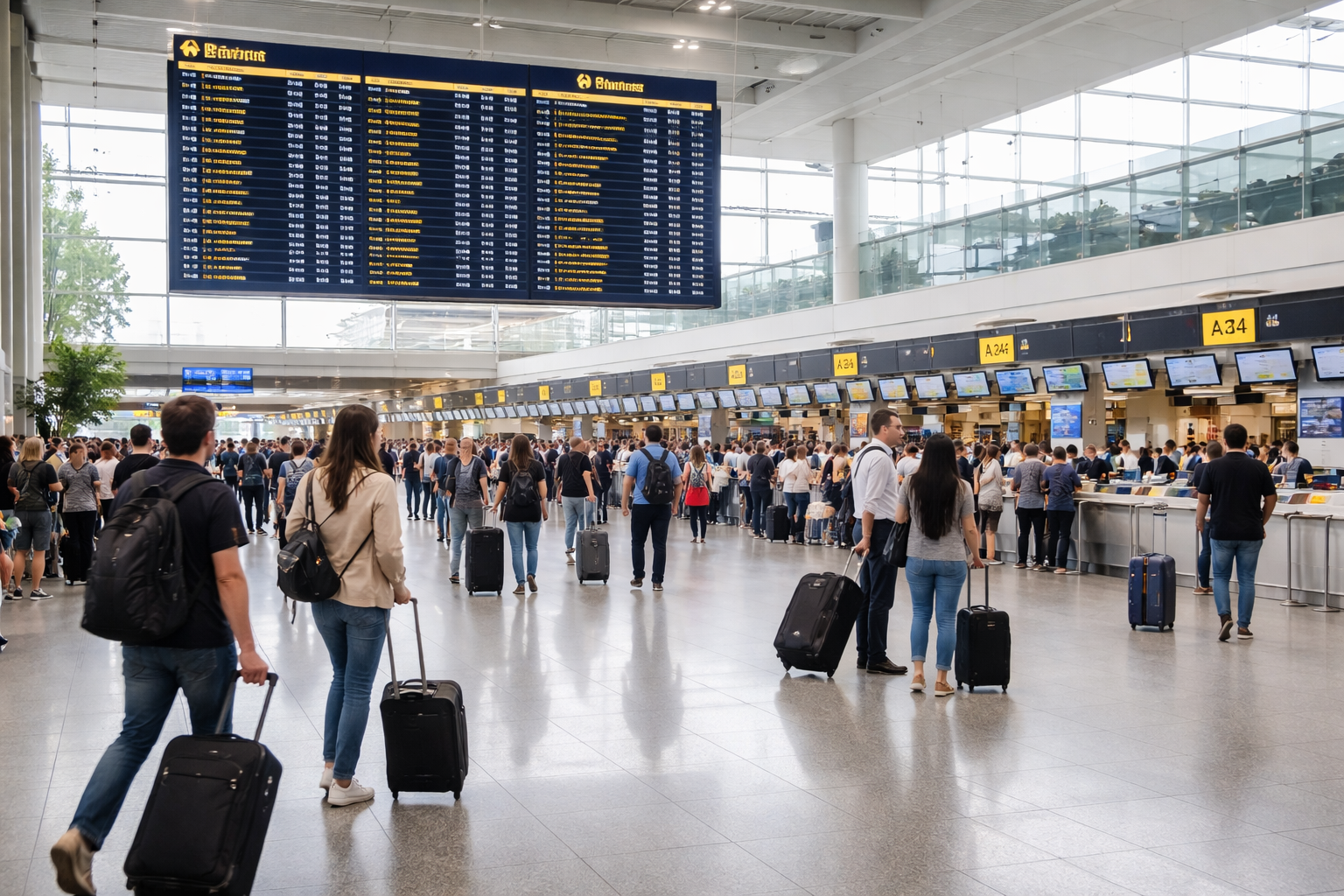
Back on the ground, airports continue to operate with their usual efficiency. Passengers move through terminals in Kuala Lumpur, Singapore, Bangkok, and beyond, checking departure boards and boarding flights bound for Europe. From the outside, nothing appears different.
Flights still depart. Gates still open. Boarding announcements still echo through terminals. Airports are designed to handle constant movement and change, and behind the scenes, scheduling teams adjust operations while the passenger experience remains largely seamless.
For passengers, travel is not just about routes and schedules—it is about purpose. Some are heading to business meetings in Europe. Others are visiting family, exploring new destinations, or returning home after long journeys. Despite operational adjustments, these human stories continue uninterrupted.
Modern travelers are rarely in the dark. With mobile apps, notifications, and real-time tracking, passengers can follow their journey every step of the way. A quick glance at a phone reveals updated departure times, gate changes, and estimated arrivals, helping reduce uncertainty even when routes shift.
Once onboard, the experience remains familiar. Cabin lights dim, meals are served, and passengers settle into their seats for long-haul travel. Outside, the aircraft follows its carefully planned path across continents. Inside, the journey feels unchanged.
What passengers do not see is the level of coordination taking place behind the scenes. Airline operations centers monitor flights in real time, air traffic controllers guide aircraft across regions, and flight planners evaluate routes using constantly updated data. This network of coordination ensures that even when conditions change, the system continues to function smoothly.
The evolving situation highlights something fundamental about aviation: its ability to adapt. Air travel is one of the most interconnected systems in the world, yet it continues to operate with consistency and reliability.
For passengers, the journey remains familiar—check-in, boarding, takeoff, arrival. What changes is the path in between. Airlines continue to adjust routes as needed, guided by safety and efficiency, while passengers continue to travel with confidence.
In the end, the story of air travel is one of continuity. The skies may shift, routes may adjust, and schedules may evolve—but the journey continues, connecting people, places, and opportunities across the world.