
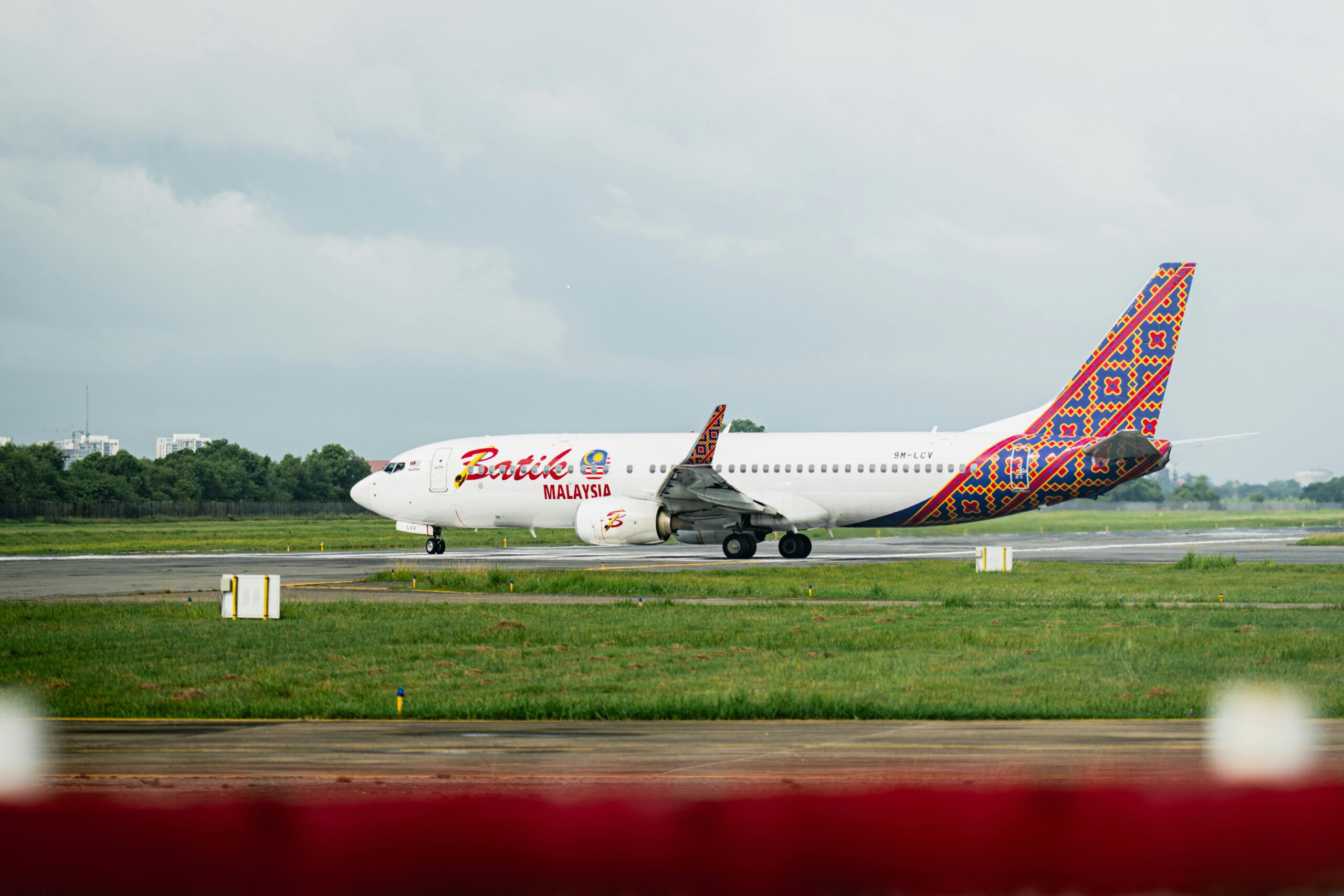
Batik Air Malaysia has reduced its network capacity by 35 per cent through the first half of April 2026, becoming the latest carrier in Southeast Asia to scale back operations as soaring jet fuel prices and Middle East geopolitical tensions place extraordinary pressure on the region’s aviation industry.
The carrier’s chief executive officer, Datuk Chandran Rama Muthy, confirmed the cuts in an internal memo dated 1 April, describing the move as a precautionary measure to conserve resources while fuel costs remain at historic highs. The reductions, which took effect in late March and are expected to run through 12 April, focus on trimming flight frequencies rather than eliminating destinations entirely.
Domestic services have borne the brunt of the adjustments. Schedule filings reviewed by industry data providers show a 36 per cent reduction in domestic flights for the 29 March to 30 April period, dropping from approximately 1,950 flights and 316,000 seats to around 1,240 flights and 201,000 seats. Seven domestic routes have been cancelled outright during this window, including Kota Kinabalu to Kuching, which has been permanently discontinued from 1 April, and six routes from Kuala Lumpur and Kuala Lumpur Subang to destinations including Alor Setar, Bintulu, Miri, Sibu, Johor Bahru and Kota Bharu.
High demand corridors have also seen meaningful frequency cuts. Services between Kuala Lumpur and Penang have been reduced from five daily flights to two, while Kuala Lumpur to Kota Kinabalu has dropped from three daily services to two. Similar reductions have been applied to longer haul routes such as Kuala Lumpur to Kathmandu and Kuala Lumpur to Perth, where frequencies have been trimmed to limit fuel consumption. International services to Singapore, Seoul Incheon, Bangkok Don Mueang and several Indonesian points have likewise been scaled back.
The trigger behind the cuts is unmistakable. Global jet fuel prices have nearly doubled since late February, driven by the escalation of the US and Iran conflict and the effective closure of the Strait of Hormuz, through which roughly 20 per cent of the world’s oil supply normally transits. According to S&P Global Platts data, average jet fuel prices reached US$195.19 per barrel for the week ended 27 March, representing a 104 per cent increase from one month earlier. Separate IATA data placed the global average at US$197 per barrel last week. Fuel, which previously accounted for between 30 and 35 per cent of Batik Air Malaysia’s operating costs, now represents an estimated 50 to 55 per cent of expenses.
Chandran said the airline does not hedge its fuel, leaving it fully exposed to price swings. He cited the financial risks airlines have incurred historically when hedged positions moved against them. Despite the cost pressures, he noted that passenger demand remains strong, with load factors in the 90 per cent range, though he acknowledged that a prolonged downturn in the global economy could begin to erode discretionary travel demand.
Beyond the capacity cuts, Batik Air Malaysia has frozen non-essential staff travel, deferred training programmes that are not safety or regulatory critical, and offered voluntary unpaid leave to employees starting 6 April. The airline employs approximately 3,500 staff. Chandran stressed that no employees are being compelled to take leave and that the measures are temporary.
The carrier is not alone. Batik Air Malaysia’s capacity reductions mirror a pattern now playing out across Southeast Asia and beyond. Vietnam Airlines has reportedly suspended several services from 1 April, cancelling 23 weekly flights. Malaysia Airlines suspended its Doha services on 28 February and has yet to restore them, while flights to Jeddah and Madinah resumed only after a brief suspension. Airlines including Malaysia Airlines, Firefly, Hong Kong Airlines, Air India and Cathay Pacific have all announced fuel surcharge increases in response to the crisis. Transport Minister Anthony Loke has publicly acknowledged that the Malaysian government is operating in crisis mode.
Batik Air Malaysia has implemented its own fuel surcharges but Chandran said these are insufficient to fully offset rising costs. Some planned route launches may face delays, although the airline is maintaining its broader expansion trajectory. It recently launched a Kuala Lumpur to Colombo service and is scheduled to begin flights to Shanghai in June, with a Sydney service also planned for July.
The airline operates roughly 1,400 weekly flights to more than 60 destinations across 21 countries, with a fleet of more than 50 aircraft including seven Airbus A330 300 widebodies and Boeing 737 800 and 737 MAX 8 narrowbodies. Chandran indicated that operations are expected to stabilise after 12 April, at which point the airline plans to halt further cancellations and reassess its position based on market conditions.
For now, the capacity reduction represents a calculated gamble: absorb short term pain to preserve the financial resilience needed to weather what may prove to be one of the most severe fuel crises the global aviation industry has faced in recent memory.