

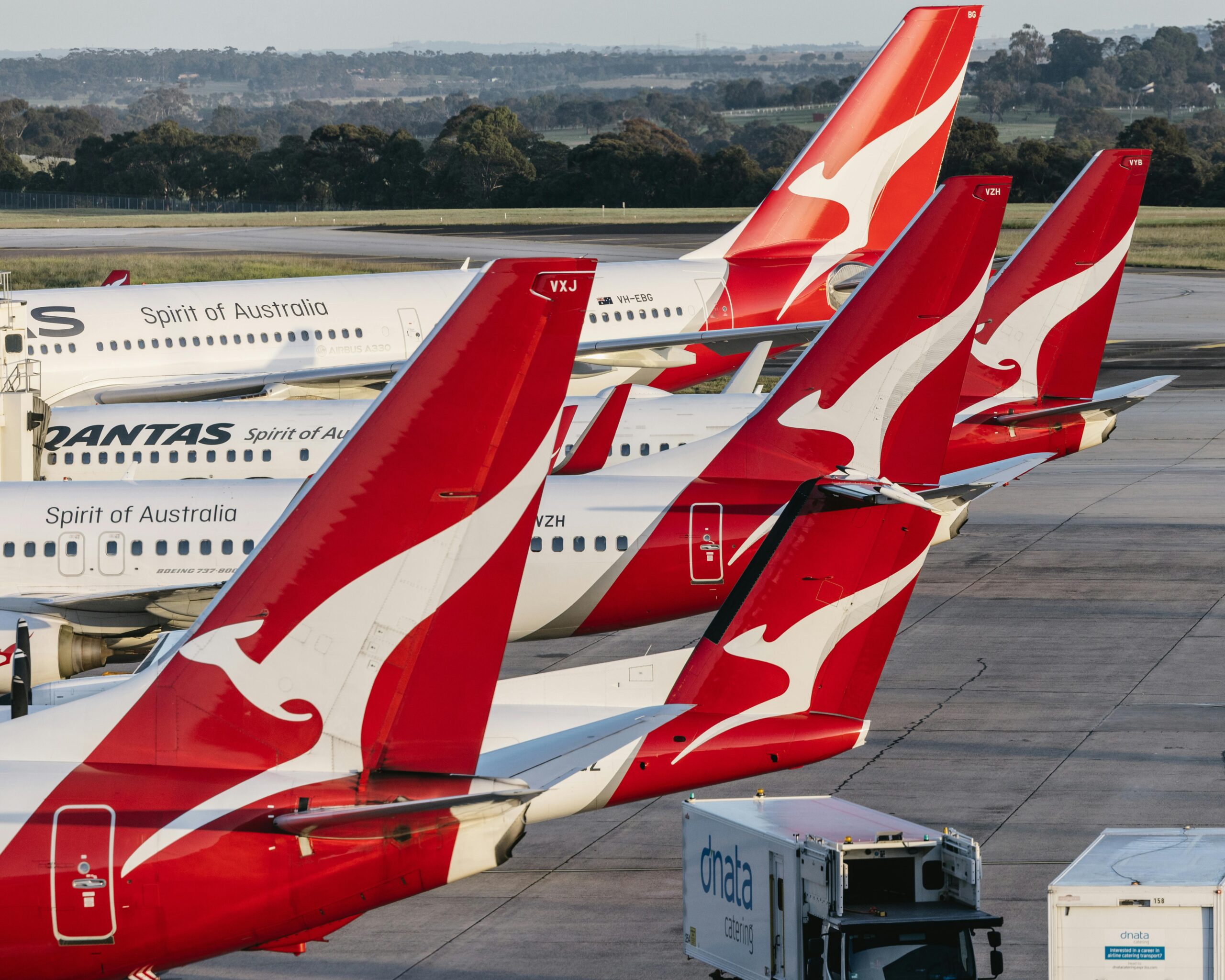
Qantas Airways has sharply revised its fuel cost outlook upward for the second half of fiscal year 2026, citing the severe and sustained impact of the Middle East conflict on global oil markets. In a trading update released on 14 April, the airline disclosed that jet fuel prices have more than doubled since the United States and Israel launched military operations against Iran in late February, forcing the carrier to recalibrate its financial projections and operational posture.
The airline now estimates its fuel bill for the six months ending 30 June 2026 will reach between A$3.1 billion and A$3.3 billion, a significant increase from the A$2.5 billion forecast issued in its half year results in late February. The revision represents an additional A$600 million to A$800 million in fuel expenditure, driven primarily by a dramatic spike in jet refining margins rather than crude oil prices alone. While Qantas has hedged approximately 90 per cent of its crude oil exposure for the period, the airline remains largely exposed to movements in refining margins, which surged from around US$20 per barrel in February to a peak near US$120 per barrel.
In response to the cost pressures, Qantas is trimming domestic capacity across its mainline and Jetstar operations by approximately five percentage points in the June quarter. Overall, fourth quarter domestic capacity is expected to be down one per cent year on year, following a five per cent increase in the preceding quarter. Affected passengers on both Qantas and Jetstar services are being contacted directly and offered rebooking or refunds. The airline is also redeploying Boeing 787 Dreamliners from US routes and Airbus A330s from domestic services to bolster European capacity through Perth.
Despite the headwinds, the carrier pointed to a constructive demand environment that is partially offsetting the fuel shock. International unit revenue growth for the second half has been revised upward to between four and six per cent, double the airline’s previous guidance, as travellers seek alternatives to disrupted Middle Eastern routing corridors. Qantas has increased services to Paris and Rome, with strong bookings reported as passengers pivot away from Gulf hub carriers whose operations have been curtailed by airspace closures and schedule suspensions.
Domestic unit revenue growth is expected at approximately five per cent for the second half, rising to six per cent in the fourth quarter, reflecting fare adjustments across the network. The airline’s Loyalty division continues to perform strongly, with underlying EBIT growth of 10 to 12 per cent expected for the full financial year.
Capital expenditure for fiscal year 2026 has been tightened to A$4.1 billion, at the lower end of its previously guided range. The planned A$150 million on market share buyback announced at the half year results has been paused, with management citing the need to preserve financial flexibility amid the volatile operating environment. Net debt is now expected to be at or above the midpoint of the A$5.6 billion to A$7.0 billion target range by 30 June. The airline’s A$300 million interim dividend of 19.8 cents per share, fully franked, will proceed as scheduled and is payable on 15 April.
The update underscores the widening financial impact of the Iran conflict on the Asia Pacific aviation sector, where carriers are contending with a convergence of soaring fuel costs, compressed airspace, and volatile demand patterns. Industry body AAPA has noted that Asia Pacific airlines face increased operational challenges as the conflict reduces the availability of airspace along key Asia to Europe corridors, constraining capacity and limiting network flexibility for affected carriers across the region.
Qantas said it is working closely with the Australian Federal Government and jet fuel suppliers, who have provided confidence in fuel supply availability through April and into May. However, the airline cautioned that the outlook remains subject to further change depending on the trajectory of the conflict and its impact on global energy markets. Fiscal year 2027 guidance will be provided at a later date given the ongoing volatility.