
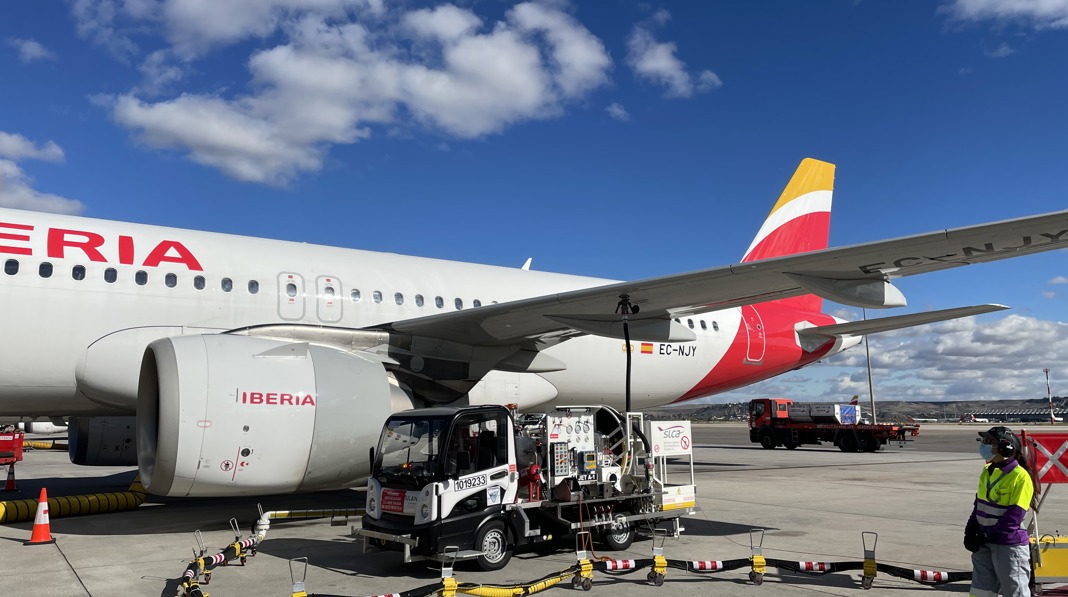
DHL Group has expanded its sustainable aviation fuel (SAF) collaboration with IAG Cargo to enable greater use of the lower carbon fuel at London Heathrow Airport, in a move that highlights both the commercial momentum behind SAF adoption and the persistent cost challenges holding back wider industry uptake.
The expanded partnership comes against a backdrop of intensifying scrutiny of the aviation industry’s decarbonisation pathway. The International Air Transport Association (IATA) has flagged that global SAF production reached just 1.9 million tonnes in 2025, accounting for only 0.6 per cent of total jet fuel consumption worldwide, far below the levels required to meet the industry’s net zero by 2050 commitments.
Speaking to the broader sustainability picture, IATA Director General Willie Walsh has noted that SAF mandates have driven prices higher in markets where they have been introduced, often more than double the price of conventional jet fuel and in some markets up to four times higher. This cost gap has dampened voluntary demand and slowed output growth, particularly affecting cargo operators that depend heavily on long haul operations where fuel represents a disproportionately large share of operating costs.
For Asia Pacific carriers, the SAF challenge is particularly acute. The region’s airlines have committed to ambitious sustainability targets but face limited domestic SAF production capacity and high import costs. Singapore has emerged as a regional leader, having approved a landmark policy requiring SAF to constitute one per cent of all jet fuel used at Changi Airport and Seletar Airport in 2026, scaling to between three and five per cent by 2030. The associated SAF levy on outbound flights from Singapore is set to take effect from 1 October 2026.
However, even Singapore has had to delay aspects of its SAF programme rollout in response to the cost pressures created by the Middle East conflict and the resulting jet fuel price surge. The Civil Aviation Authority of Singapore (CAAS) confirmed earlier this year that adjustments to the implementation timeline would help carriers manage the transition during a period of exceptional operational disruption.
Other regional sustainability initiatives are gaining traction. Austrian Airlines has reported saving more than US$1 million in fuel costs through the use of AeroSHARK, a shark skin inspired riblet film applied to the fuselage of Boeing 777s that reduces aerodynamic drag. The technology represents one of several incremental efficiency gains that carriers are pursuing alongside SAF as part of broader emissions reduction strategies.
Aircraft manufacturers are also positioning themselves for the sustainability transition. Both Airbus and Boeing have published 20 year market forecasts that emphasise the role of fleet renewal in delivering emissions reductions, with new generation aircraft offering 15 to 25 per cent fuel efficiency improvements over the previous generation types they replace. For Asia Pacific airlines that are actively expanding fleets, the choice of new aircraft has direct implications for long term emissions performance.
The DHL and IAG Cargo expansion at Heathrow represents the kind of corporate-to-corporate SAF partnership that industry observers have identified as critical to building demand at scale. By committing to use SAF on specific cargo flows, DHL provides IAG Cargo with the volume certainty needed to justify SAF procurement, while IAG Cargo can offer DHL a verified lower carbon transport option for clients with their own sustainability commitments.
Similar partnership models are emerging across the region. Asia Pacific airlines have begun signing SAF offtake agreements with regional fuel suppliers and producers, although the volumes involved remain modest relative to total fuel consumption. The Association of Asia Pacific Airlines (AAPA) has continued to advocate for harmonised SAF policies across the region to avoid market fragmentation and to provide investment certainty for fuel producers.
For Malaysian aviation stakeholders, the SAF debate intersects with broader national policy discussions around energy transition and palm oil derived biofuels. Malaysia has positioned itself as a potential SAF producer given its established palm oil industry, although the use of palm derived feedstocks for aviation fuel remains contested internationally on sustainability grounds. The development of credible domestic SAF capacity will be a key consideration for Malaysian carriers seeking to meet international decarbonisation expectations while managing cost competitiveness.