
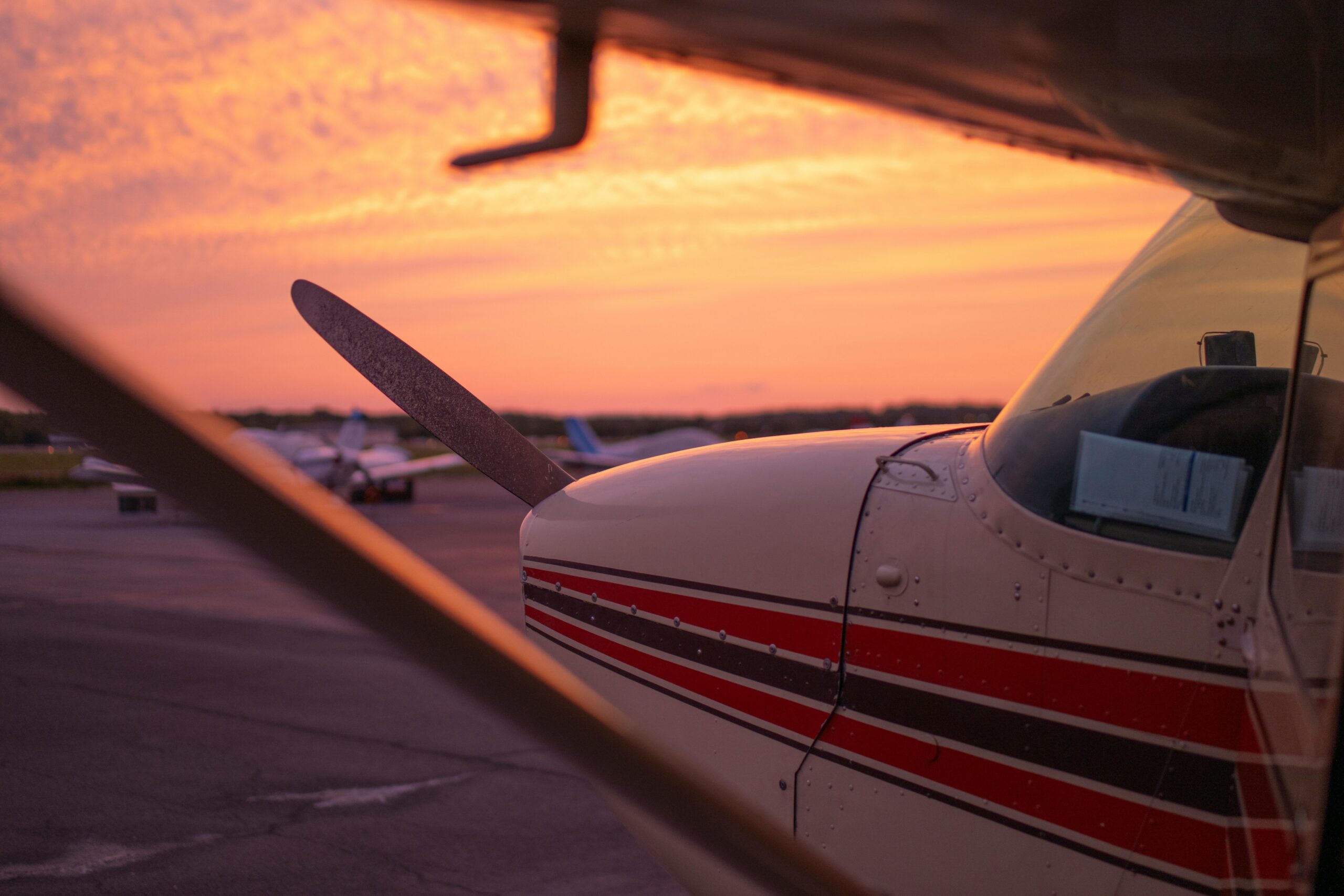
Across Southeast Asia, the cockpit remains one of the most aspirational career destinations a school leaver can choose. The pull is understandable. Boeing forecasts that the region alone will need around 60,000 new pilots over the next two decades, and major carriers from Kuala Lumpur to Cebu are already running cadet campaigns to plug the post pandemic shortfall. The arithmetic of getting into that cockpit, however, is where many promising journeys quietly stall.
This article looks at what pilot training actually costs in 2026, why the sticker price is rarely the full price, and what financing pathways are realistically open to families weighing the decision.
The headline numbers
In Malaysia, a complete integrated CPL/IR programme, often described locally as a Frozen ATPL, currently sits in the RM350,000 to RM400,000 band at most CAAM approved Training Organisations, with some schools quoting around RM398,000 for the standard package. Some programmes that bundle a diploma or degree push past RM450,000. Standalone PPL training, often the first stepping stone for a self funded student, ranges from roughly RM60,000 to RM90,000 depending on the school, the aircraft type and how efficiently the student progresses.
Elsewhere in the region, the picture is broadly similar in shape but different in scale. The Philippines remains the budget benchmark, with full CPL programmes available from around USD 35,000 to USD 50,000. Indonesia and Thailand sit in the middle, while Singapore based training, where it exists, runs noticeably higher because of cost of living and aircraft access. For Malaysian families considering training abroad, the United States, Australia and New Zealand are popular alternatives, with total costs typically converted into a similar RM350,000 to RM500,000 range once living expenses, currency exposure and conversion training back to a CAAM licence are factored in.
Why the brochure price is almost never the final price
The single biggest source of family disappointment is not the headline figure. It is the gap between the quoted course fee and the eventual all in cost. Several line items routinely sit outside the quoted package.
- Class 1 medical certification, renewals and any follow up specialist clearances if the candidate has correctable conditions.
- English language proficiency testing, ground school resits and examination fees payable to the regulator.
- Personal equipment, headsets, charts, uniforms and a basic flight bag.
- Living expenses during training, which for an out of state student in Malaysia can comfortably add RM30,000 to RM50,000 over a two year programme.
- Additional flight hours if the student exceeds the syllabus minimum, which most students do.
- Type rating after graduation, frequently another USD 25,000 to USD 35,000 if the airline does not absorb it.
A useful rule of thumb is to add fifteen to twenty per cent on top of the quoted course price when budgeting. A programme advertised at RM380,000 should be planned around a RM440,000 to RM460,000 envelope. Families who treat the brochure number as the ceiling rather than the floor are the ones most likely to run out of runway, sometimes literally, in the final months of training.
The financing menu
There is no single dominant financing route in this region. Most cadets end up combining two or three of the following.
Self funding remains the default for a large share of students, particularly those entering through the PPL route or pursuing modular training. It offers maximum flexibility on school choice and pace, but exposes the family to the full capital outlay.
Bank education loans are available from most major Malaysian banks for CAAM approved programmes, typically with repayment beginning after a grace period. Approval depends heavily on parental income and collateral. Interest rates and tenures vary, so families should compare at least three offers and read carefully for clauses on disbursement schedules tied to training milestones.
Government linked support exists but is narrower than many assume. PTPTN, the National Higher Education Fund, supports certain aviation linked degree programmes rather than standalone flight training, so the structure of the chosen course matters. MARA sponsorship is available for eligible Bumiputera students for selected programmes, though places are competitive and conditions on bonded service apply.
Airline cadet programmes are the most cost effective route on paper and the most competitive in practice. AirAsia, Malaysia Airlines, Cebu Pacific and several other regional carriers run schemes that either subsidise training or provide a guaranteed First Officer position on successful completion. Terms vary widely. Some programmes are heavily subsidised with a bonded service period of seven to ten years. Others, such as the current Cebu Pacific Cadet Pilot Program 2.0 with Airworks Aviation Academy, are structured as self funded programmes with a guaranteed employment pathway on completion, where applicants pay only a modest screening fee at the front end and arrange financing for the training itself, often through partner bank facilities. The trade off across all of these structures is binding service obligations, limited mobility in the early career years, and tightly defined progression timelines. Families should read the cadet contract as carefully as any loan agreement, because in effect that is what it is.
Scholarship support from regional aviation associations and OEM linked programmes exists but is modest in scale, usually filling gaps rather than funding entire courses. Families should still apply, because even a partial award reduces the principal the family carries.
Reading the return on investment honestly
A first officer position with a regional Southeast Asian carrier in 2026 typically pays between USD 2,500 and USD 5,000 a month in the first few years, depending on the airline, fleet and base. Captains in the same region earn USD 8,000 to USD 20,000 monthly once command is achieved, which usually takes between five and ten years post hiring. Over a thirty year career, total earnings can comfortably reach USD 3 million to USD 10 million, which is why the investment, even at RM450,000 plus, is defensible if the candidate actually reaches the line.
The honest caveat is that not every cadet who starts training reaches that line. Medical disqualification, training failures, hiring slowdowns and personal circumstances all intervene. Families should stress test the decision against a scenario in which the candidate completes a CPL but does not secure an airline seat within twelve to eighteen months. Can the loan still be serviced? Is there a fallback in instructing, charter or general aviation? These are uncomfortable questions, but they are the right ones to ask before the first deposit is paid.
Practical guidance for families
Three principles tend to separate families who navigate this well from those who do not.
First, choose the school for completion rate and airline placement record, not for the lowest fee. A school that quotes RM320,000 but routinely takes twenty per cent longer than syllabus is more expensive than a school that quotes RM380,000 and finishes on time.
Second, structure the financing so that no single source carries more than seventy per cent of the cost. Diversifying between family contribution, a bank facility and any available scholarship or sponsorship reduces concentration risk if any one source becomes constrained mid course.
Third, treat the cadet pilot programme route as the default option to apply for, even if self funded training is the eventual plan. The application process itself, including aptitude testing, medical screening and structured interviews, is a useful early signal of whether the candidate is genuinely suited to the profession. A failed selection at age nineteen, before half a million ringgit has been committed, is not a setback. It is a saved investment.
Closing thought
The cost of becoming a pilot in Southeast Asia in 2026 is real and rising, but the regional pilot shortage means demand on the other side of the runway is also real. Families who go in with clear eyes on the full cost envelope, a diversified financing structure and a candid view of the risks tend to get their money, and their child, into the right seat. Those who treat it as a brochure decision rarely do.
Editor’s note: This article provides general information for prospective pilots and their families and is not financial advice. Cost figures, sponsorship terms and airline cadet programme conditions are subject to change. Readers should verify current terms directly with the relevant flying school or airline and consult a licensed financial adviser before committing to training loans or sponsorship arrangements