

My Aviation | HEMS & Aviation Medicine | 7 October 2026
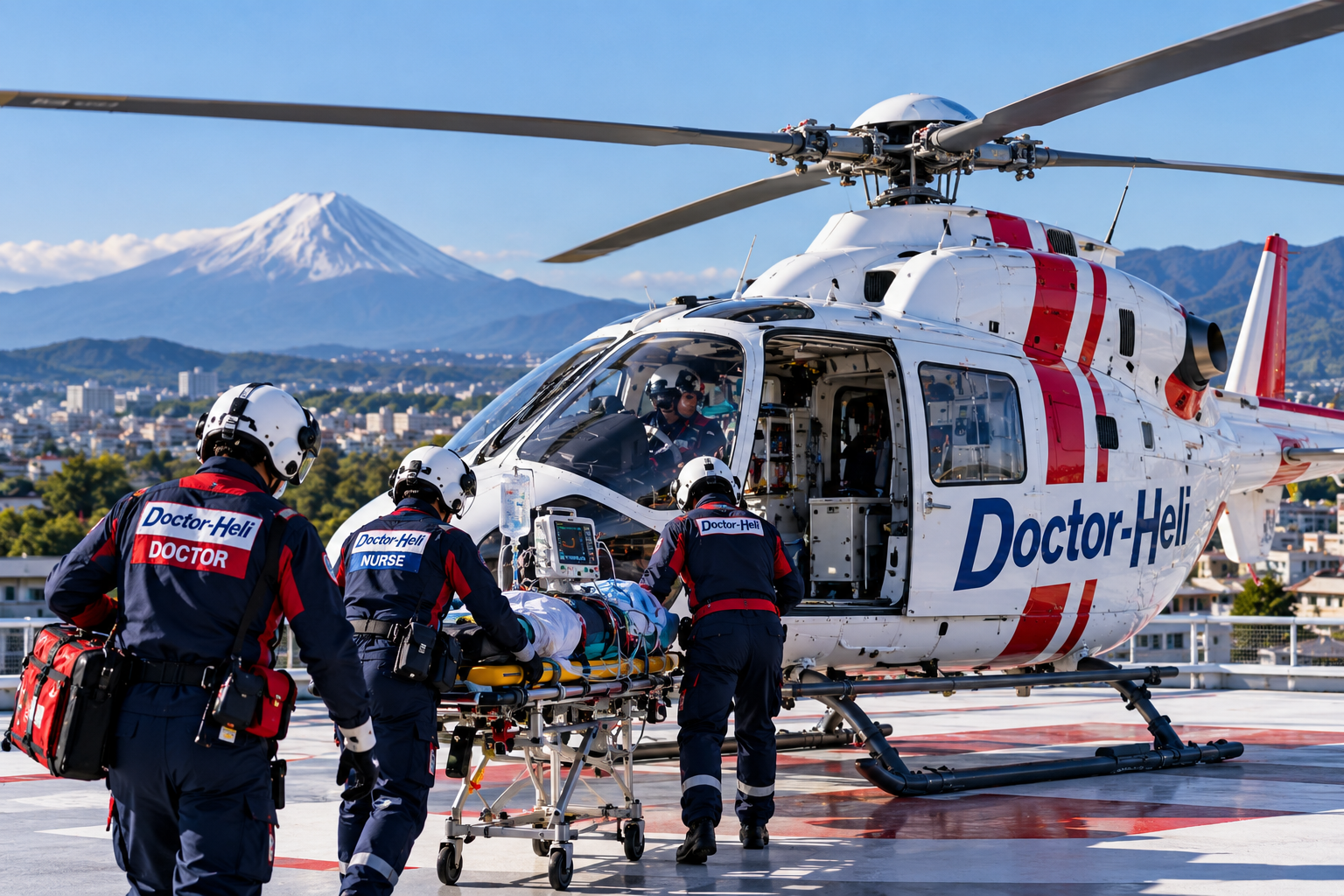
Japan is reviewing the long-term future of its Doctor-Heli emergency medical helicopter system as the country confronts growing questions over staffing, aircraft availability and the sustainability of emergency medical aviation.
Japan’s Ministry of Health, Labour and Welfare published an interim summary on 30 September 2026 following a series of meetings examining the future of emergency medical transport and Doctor-Heli operations. The review notes that Doctor-Heli and doctor-car services remain important parts of Japan’s emergency medical system, while also acknowledging that some regions have experienced service suspensions and difficulties securing operators.
Doctor-Heli has become one of Asia’s most established physician-staffed helicopter emergency medical models. Its role goes beyond rapid transportation. Doctors and nurses are flown directly to emergency scenes so advanced treatment can begin earlier, while critically ill or injured patients can be transferred more quickly to appropriate hospitals.
The current review, however, shows that maintaining such a system over decades brings a different set of challenges.
Japan’s health minister said some Doctor-Heli operators have experienced suspensions linked to shortages of aircraft maintenance personnel. He also noted that interest in aircraft maintenance careers has declined since the pandemic period and that the ageing of helicopter pilots is becoming a longer-term workforce concern. The ministry is therefore examining how to secure and train the personnel needed for stable operations.
These pressures have prompted discussion about how Japan should organise its emergency medical aviation resources in the future.
One area under review is stronger cooperation between neighbouring prefectures. Japan has already encouraged regions to consider arrangements involving nearby Doctor-Heli aircraft and fire or disaster-response helicopters so emergency coverage can continue when a local aircraft is unavailable.
Hyogo Prefecture has also introduced a two-pilot operating model on its two Doctor-Heli aircraft in some circumstances. According to material presented to the ministry, the arrangement began in August 2026 and had not produced significant operational problems at the time of reporting.
The review also considers aircraft availability, operator selection, medical staffing, funding and how Doctor-Heli should work alongside ground ambulances, doctor cars and other emergency aviation resources.
The wider question is sustainability.
A HEMS system depends on far more than helicopters. It requires experienced pilots, engineers, doctors, nurses, dispatchers, hospitals, maintenance organisations and a regulatory structure capable of keeping all of those elements working together safely.
Japan’s experience is therefore particularly relevant to the rest of Asia.
Several countries across the region are considering or expanding helicopter emergency medical services. But Japan’s current review demonstrates that building the network is only the first stage.
The longer-term challenge is ensuring that enough qualified people, aircraft and financial resources remain available to sustain it.
Japan’s ministry has indicated that the future shape of emergency medical transport will continue to be examined with longer-term changes in population and regional healthcare provision in mind.
For Asia, the lesson is increasingly clear.
The next generation of HEMS will not be defined only by how many helicopters a country operates.
It will be defined by whether those aircraft can remain safe, staffed, available and integrated with the wider healthcare system for decades to come.
My Aviation will continue to follow Japan’s Doctor-Heli review as the government moves from interim recommendations toward future policy decisions.