

How the Iran Airspace Situation Is Influencing Asia–Europe Flight Operations
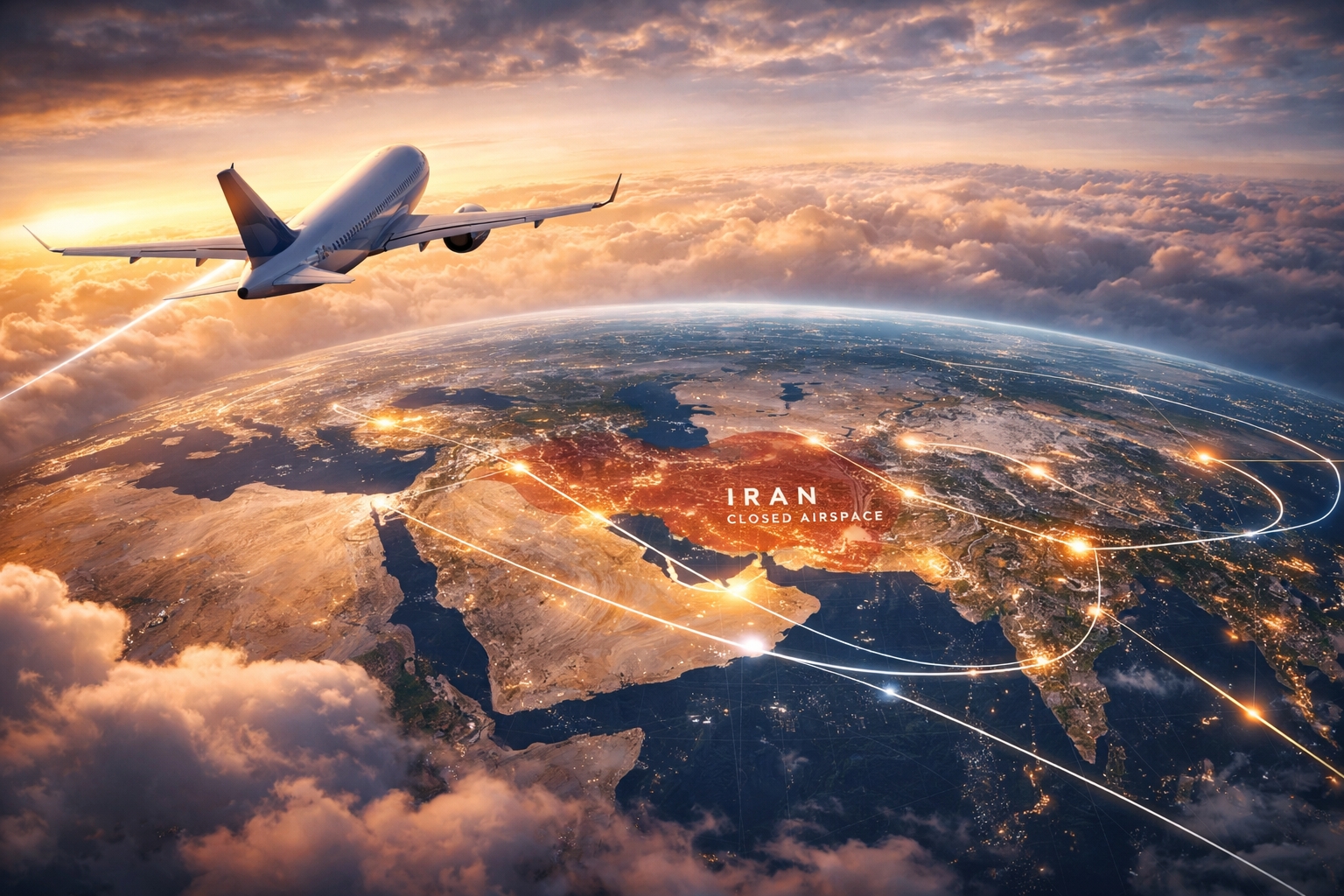
Airspace across the Middle East has long played a critical role in global aviation, particularly for flights connecting Asia and Europe. Developments involving Iranian airspace in recent months have prompted airlines and aviation authorities to carefully evaluate flight operations and routing strategies in order to maintain safe and efficient travel across one of the world’s busiest aviation corridors.
For airlines operating between major Asian hubs and European destinations, the region provides some of the most direct flight paths available. As a result, any changes in airspace accessibility or operational advisories can influence route planning across multiple continents.
The aviation industry has responded by adapting flight routes, adjusting operational planning, and coordinating closely with international aviation authorities to ensure that safety remains the top priority.
The Importance of the Asia–Europe Aviation Corridor
Flights connecting Asia and Europe represent one of the largest long-haul travel markets in the global aviation system. Major cities such as Singapore, Kuala Lumpur, Bangkok, Tokyo, and Hong Kong maintain extensive air links with European destinations including London, Frankfurt, Paris, and Amsterdam.
The traditional routing for many of these flights crosses airspace over parts of the Middle East, including Iran and neighboring regions. This corridor allows airlines to operate efficient routes that minimize travel time and fuel consumption.
Because of its strategic location between two major continents, Iranian airspace has historically served as an important transit zone for long-haul international flights.
When developments occur that affect airspace availability, airlines must carefully review route planning to ensure continued operational safety.
Airline Route Adjustments
Airlines rely on advanced flight planning systems that allow operations teams to quickly evaluate alternative routing options. If a particular airspace corridor becomes less favorable for operational reasons, flights can be redirected through neighboring regions while maintaining international connectivity.
Several alternative routing paths exist for flights traveling between Asia and Europe. These routes may include:
- Northern corridors through Central Asia
- Southern paths through the Arabian Peninsula
- Routes across the eastern Mediterranean
Each option presents its own operational considerations, including flight distance, weather patterns, and air traffic congestion.
Although alternative routes may slightly increase travel time, airlines typically plan carefully to minimize any impact on passengers.
Operational Implications for Airlines
Adjustments to flight routes can influence several aspects of airline operations. One of the most immediate effects is the potential for longer flight distances, which may increase fuel consumption for long-haul services.
Fuel costs represent a significant portion of airline operating expenses, and even modest increases in flight time can affect overall efficiency.
Airlines must also consider factors such as:
- aircraft range capabilities
- crew duty limitations
- aircraft rotation schedules
- airport arrival slots
Operations teams work closely with air traffic management authorities to coordinate these changes while maintaining safe flight operations.
Modern aircraft technology provides airlines with greater flexibility in adapting to route changes. Aircraft such as the Boeing 787 Dreamliner and Airbus A350 are designed for long-haul efficiency and are capable of operating across a wide range of routes.
The Role of Middle Eastern Aviation Hubs
The Middle East also plays an important role as a global aviation hub. Airports such as Dubai International Airport, Doha Hamad International Airport, and Abu Dhabi International Airport serve as major connecting points between Asia and Europe.
These hubs facilitate large volumes of passenger transfers, allowing airlines to operate extensive global networks.
Developments affecting regional airspace can influence flight patterns into and out of these hubs, prompting airlines to adjust scheduling and routing strategies.
However, the region’s advanced air traffic management systems and strong aviation infrastructure help support continued connectivity.
Passenger Experience and Travel Demand
From a passenger perspective, the impact of routing adjustments is often limited. Airlines typically strive to maintain regular schedules and ensure that flights continue to operate smoothly.
In some cases, travelers may notice slightly longer flight durations on certain routes between Asia and Europe. However, airlines generally work to keep these changes minimal.
Passenger demand between Asia and Europe remains strong, supported by tourism, business travel, and international trade connections.
As a result, airlines continue to prioritize maintaining reliable services across these important long-haul markets.
Industry Cooperation and Safety Oversight
International aviation operates within a highly coordinated framework involving regulators, airlines, and global aviation organizations.
Groups such as the International Civil Aviation Organization (ICAO) and regional aviation authorities help provide guidance regarding airspace conditions and safety advisories.
Airlines rely on these updates when making operational decisions and evaluating route options.
The aviation industry has extensive experience adapting to changing conditions, including weather disruptions, volcanic activity, and other operational challenges.
This collaborative system allows airlines to respond quickly while maintaining high safety standards.
Looking Ahead
While developments involving Iranian airspace continue to be monitored by the global aviation community, the industry remains well equipped to adapt to changing operational conditions.
Air travel networks have evolved to become highly flexible, allowing airlines to maintain connectivity even when routing adjustments are required.
For Asia–Europe aviation markets, the long-term outlook remains strong. Passenger demand continues to grow, supported by economic expansion, tourism, and global business connections.
Airlines, regulators, and air traffic management organizations will continue to work together to ensure that international flights operate safely and efficiently across global air corridors.
The current situation highlights the importance of adaptive planning and international cooperation in sustaining one of the most interconnected transportation systems in the world.