


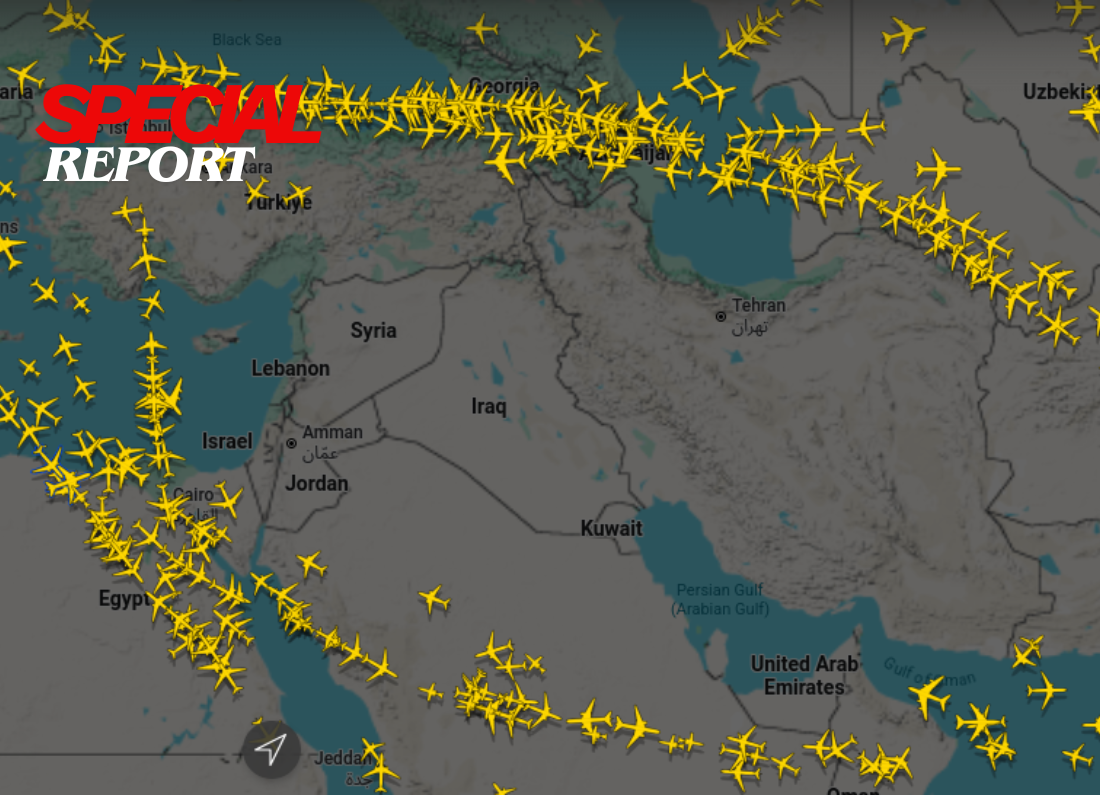
Active military conflict involving Israel, the United States and Iran has led to extensive airspace restrictions across parts of the Middle East. Civil aviation authorities in the region have issued advisories and, in some cases, temporary closures in response to evolving security conditions.
While Malaysia remains geographically distant from the conflict zone, its airlines operate within a globally interconnected air transport system. As a result, developments in one region can influence flight operations far beyond the immediate area.
A Strategic Transit Corridor Disrupted
The Middle East functions as a critical transit bridge between Asia and Europe. Many long haul services from Southeast Asia to Europe traditionally utilise routings that pass through or near affected airspace.
When segments of that corridor become unavailable, aircraft are required to reroute around restricted zones. The result is not a halt in operations, but a reconfiguration of established flight paths.
These adjustments typically involve:
- Longer block times
- Increased fuel burn
- Revised crew duty planning
- Altered aircraft rotation cycles
From a network perspective, what appears as a small geographic restriction can create wide operational ripple effects.
Implications for Malaysian Airlines
For Malaysian carriers operating Europe services, alternative routings may extend journey times and increase operating costs. Airlines will assess:
- Route viability
- Frequency adjustments
- Fleet deployment efficiency
- Connection timing integrity
Flights to certain Middle Eastern destinations may also be subject to schedule reviews depending on prevailing regulatory guidance and airport operations.
It is important to note that such decisions are driven primarily by safety assessments and regulatory advisories.
Duration Determines Impact
The degree of long term effect depends largely on how long airspace restrictions remain in place.
Short Duration Scenario
If restrictions are temporary, impacts may be limited to:
- Contained cost increases
- Isolated schedule changes
- Temporary passenger rebooking activity
Airlines are accustomed to managing short term airspace closures through contingency planning.
Prolonged Conflict Scenario
If the conflict persists and airspace limitations remain extended or unpredictable, broader consequences could emerge:
- Sustained cost pressures from longer routings
- Increased fuel exposure
- Potential fare adjustments
- Reduced operational flexibility
Network planning may require recalibration if route economics shift materially over time.
A System Built for Adaptation
Global aviation has historically operated through periods of geopolitical instability. The industry’s resilience lies in its ability to adjust routing, optimise fleet utilisation and maintain regulatory compliance while prioritising safety.
Although the current conflict introduces uncertainty into a key global transit corridor, airlines will continue to operate within structured safety frameworks and international aviation guidance.
The global network remains intact. Its pathways, however, are temporarily evolving.











Leave a Reply