

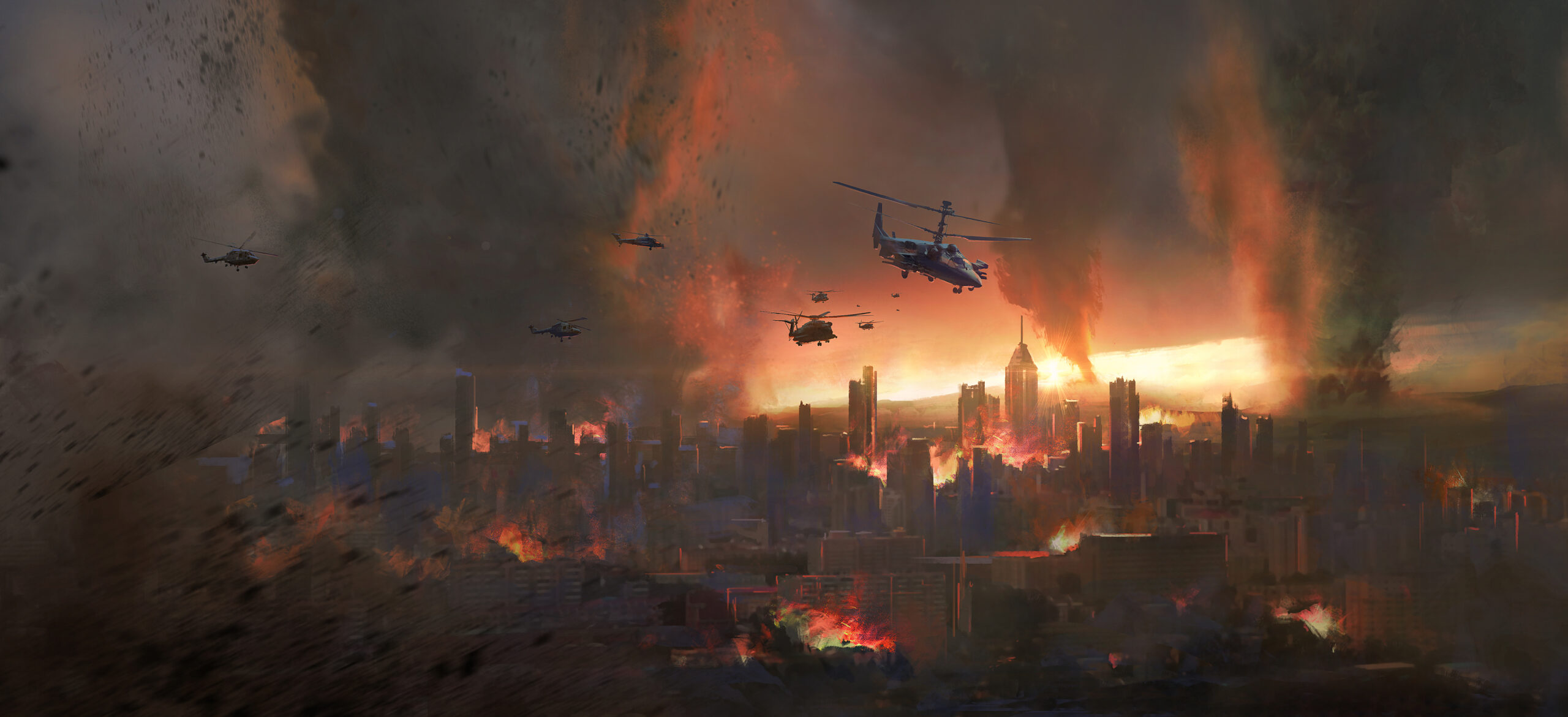
The United States military campaign against Iran, designated Operation Epic Fury, represents the largest American aerial offensive since the opening phase of the Iraq War in 2003. The operation has demonstrated both the overwhelming capabilities of modern precision airpower and the limitations of sustained long range strike campaigns.
The military buildup preceding the strikes was described by observers as the largest US deployment to the Middle East since 2003. The aircraft carrier USS Gerald R. Ford and USS Abraham Lincoln, accompanied by guided missile destroyers, formed the naval backbone of the operation. The Ford carrier strike group, positioned in the region since mid February, provided a sustained launch platform for air operations.
In the first 96 hours alone, the US led coalition expended approximately 5,197 munitions across 35 different types, according to analysis by the Foreign Policy Research Institute. The munitions replacement cost for those four days alone was estimated at between $10 billion and $16 billion. A senior Trump adviser later indicated the total war expenditure had reached $12 billion by mid March.
The campaign prioritised Iran’s nuclear facilities, ballistic missile infrastructure, naval assets and drone production capabilities. CENTCOM confirmed that US forces hit military aircraft and drone launchers at airbases across the country, destroying multiple F 14 Tomcats, Su 22M4 Fitter aircraft and other platforms on the ground. Strikes on Kharg Island targeted Iran’s energy and logistics infrastructure, a critical hub for oil exports.
The US Air Force deployed its full spectrum of strike assets. Tomahawk cruise missiles, launched from naval vessels, formed a significant portion of the initial salvos. B 2 Spirit stealth bombers and B 1B Lancers conducted long range precision strikes, while F 15E Strike Eagles and F 35 Lightning II fighters provided tactical air support. MQ 9A Reaper drones were employed for persistent surveillance and strike missions, though at least 11 were shot down by Iranian forces during the campaign.
Aerial refuelling proved critical and costly. On 13 March, all six crew members aboard a USAF KC 135 Stratotanker were killed when the aircraft crashed in western Iraq. The Pentagon attributed the loss to non hostile causes, though an Iranian proxy group claimed responsibility.
The operation has raised significant questions about US military readiness for other potential conflicts. Experts at the Atlantic Council have warned that the campaign is draining inventories of critical munitions, with implications for homeland defence and any potential confrontation with China. The Holston Army Ammunition Plant in Tennessee, the sole domestic source of the high explosives used in US warheads, had received no orders to increase production as of 12 March.
The White House has declared the operation a success, claiming “complete and total aerial dominance over Iran.” However, Iran continues to launch missiles and drones, albeit at significantly reduced rates. The gap between declared victory and ongoing hostilities underscores the complexity of achieving strategic objectives through airpower alone.