


Both pilots aboard Air Canada Express Flight AC8646 were killed on Sunday night when their Bombardier CRJ 900 collided with a Port Authority fire truck while landing at New York’s LaGuardia Airport, in what authorities have described as the airport’s first fatal accident in more than three decades.
The aircraft, operated by Jazz Aviation on behalf of Air Canada, had departed Montréal Trudeau International Airport with 72 passengers and four crew members. It touched down on Runway 4 at approximately 11.40pm local time before striking the emergency vehicle, which was crossing the runway en route to a separate incident involving a United Airlines flight that had reported an unusual odour in its cabin.
The impact destroyed the cockpit and forward galley of the aircraft. The captain, Antoine Forest, from Coteau du Lac in Quebec, and first officer MacKenzie Gunther were both pronounced dead at the scene. Federal Aviation Administration administrator Bryan Bedford described the two aviators as young men at the start of their careers, calling their deaths an absolute tragedy.
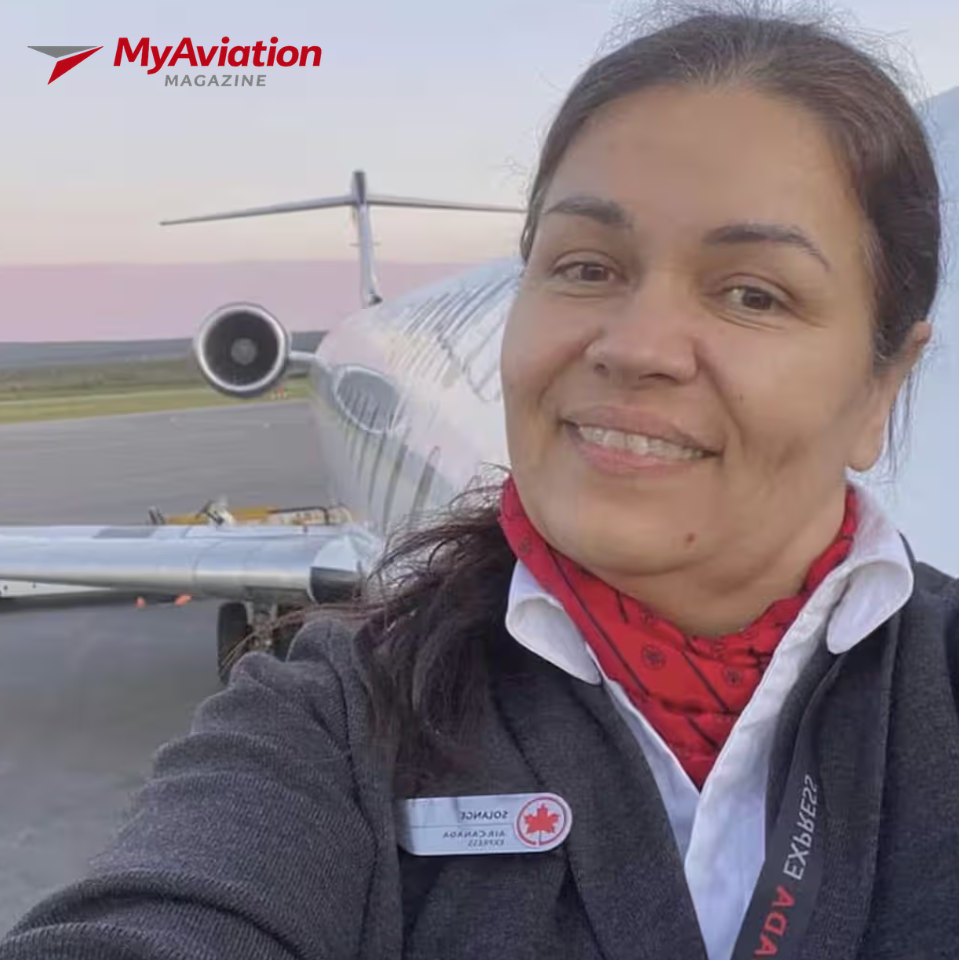
In a remarkable account of survival, lead flight attendant Solange Tremblay was found alive on the tarmac, still strapped into her jump seat more than 100 metres from the wreckage. Her daughter, Sarah Lépine, told Canadian broadcaster TVA Nouvelles that Tremblay had sustained multiple fractures to her right leg and would require surgery, but was otherwise expected to recover. Lépine described her mother’s survival as a complete miracle.
Aviation safety experts have attributed Tremblay’s survival to the reinforced four point harness system fitted to crew jump seats, which is designed to withstand significantly greater crash loads than standard passenger seating. Former federal crash investigator Jeff Guzzetti noted that the jump seat is bolted directly to the cockpit wall and built to endure forces that would be catastrophic in a conventional seat.
A total of 41 passengers and crew were transported to local hospitals following the collision, along with two Port Authority firefighters who had been inside the vehicle. By Monday afternoon, 32 of those hospitalised had been released, though several passengers remained under care with serious injuries. The two firefighters were reported to be in stable condition.
Air traffic control audio recordings reviewed by multiple media outlets captured a controller clearing the fire truck to cross the runway before abruptly ordering it to stop. One controller was heard saying he had made an error. The National Transportation Safety Board, which is leading the investigation, has confirmed that both the cockpit voice recorder and the flight data recorder have been recovered undamaged and transported to the agency’s laboratory in Washington, D.C. for analysis.
NTSB Chairwoman Jennifer Homendy said multiple investigative teams had been deployed, including groups examining aircraft operations, systems, structural damage, airport operations, and survival factors. Canada’s Transportation Safety Board is also sending investigators to participate in the probe.
US Transportation Secretary Sean Duffy said LaGuardia’s air traffic control tower was adequately staffed at the time of the incident, with 33 certified controllers and seven in training against a target of 37. He did not disclose how many controllers were on duty during the overnight shift when the collision occurred.
LaGuardia Airport reopened a single runway at 2pm on Monday, some 14 hours after the crash. The runway where the collision took place will remain closed until at least 7am on Friday, according to an FAA notice. Hundreds of flights were cancelled on Monday as disruptions rippled across the New York metropolitan area.
Passengers who were aboard the flight have praised the pilots’ actions in the final seconds before impact. One passenger, Clément Lelièvre, said the crew braked extremely hard immediately after touchdown, a response he credited with saving the lives of those in the cabin. Another passenger, Rebecca Liquori, said she would not be here had it not been for the pilots acting quickly.
Air Canada President and CEO Michael Rousseau described the day as a very sombre one for the airline and expressed the company’s deepest sorrow for everyone affected. Jazz Aviation, the regional operator, serves 70 destinations across the United States and Canada.
The incident has refocused attention on runway safety and the coordination of ground vehicle movements at major airports, particularly in the context of a broader aviation industry contending with staffing pressures and, in the United States, the effects of a partial government shutdown on Transportation Security Administration operations.