

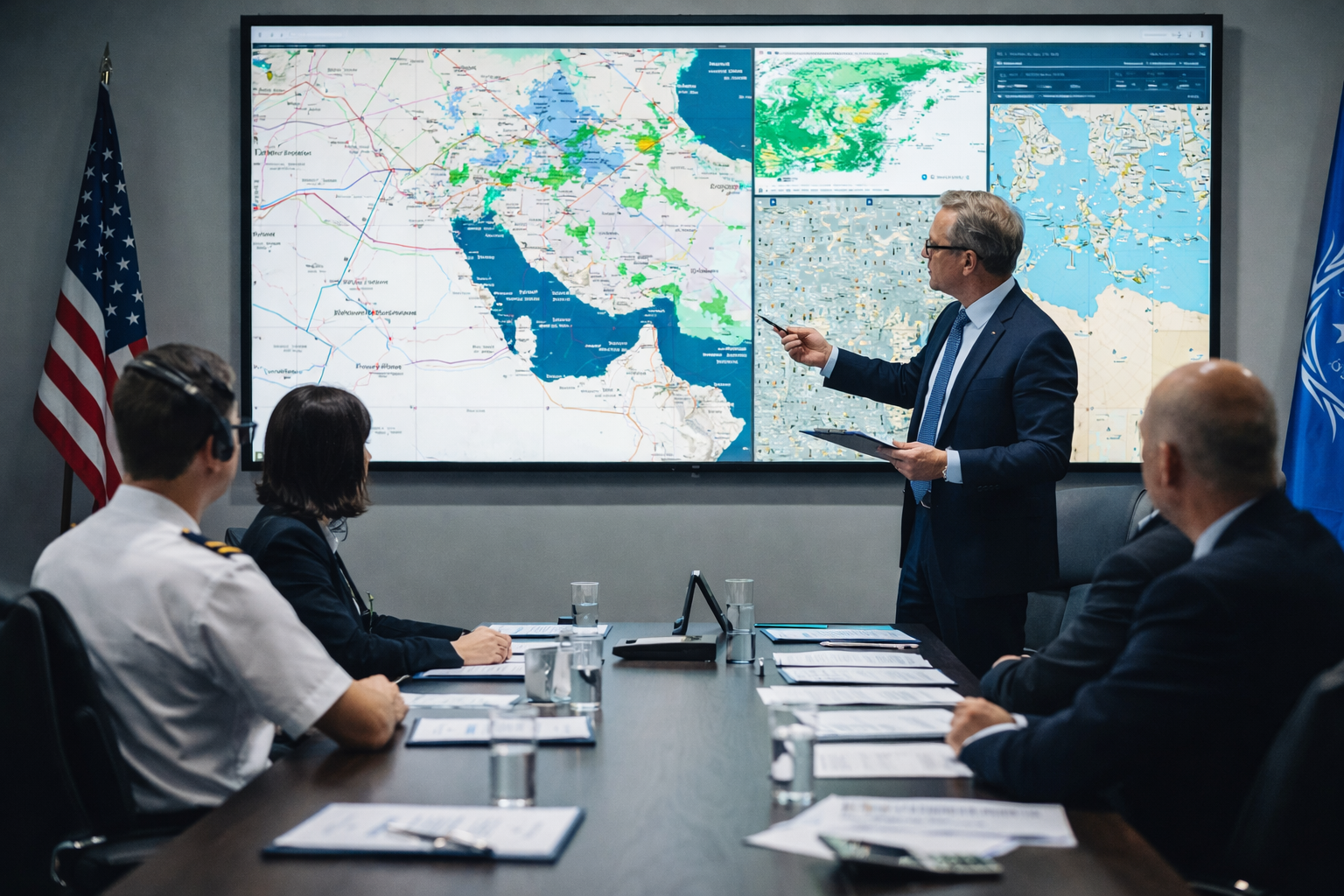
Global aviation operates within a highly coordinated regulatory framework, where aviation authorities play a central role in ensuring safety, consistency, and operational stability. As airlines adapt to evolving airspace conditions across parts of the Middle East, including areas involving Iran, these authorities are responsible for providing guidance, oversight, and coordination across international boundaries.
While much of the public focus is on airlines and flight operations, aviation authorities work behind the scenes to ensure that all decisions are aligned with global safety standards.
A Global System of Coordination
Aviation is one of the most internationally regulated industries in the world. Organizations such as the International Civil Aviation Organization (ICAO) establish global standards that guide how countries manage their airspace.
In addition to ICAO, regional and national aviation authorities monitor developments within their jurisdictions and share information with international partners. This coordination allows airlines to operate across borders with a consistent set of rules and expectations. When airspace conditions evolve, this global network becomes even more important.
Issuing Advisories and Guidance
One of the primary roles of aviation authorities is to issue advisories that inform airlines about operational conditions. These advisories may include:
- airspace availability updates
- recommended routing considerations
- safety notices for specific regions
Airlines use this information as part of their decision-making process when planning flights.
These advisories are designed to support safe operations while allowing airlines the flexibility to manage their own routing strategies.
National Airspace Management
Each country is responsible for managing its own airspace through national aviation authorities and air navigation service providers.
These organizations:
- monitor air traffic within their region
- coordinate with neighboring airspace authorities
- ensure safe separation between aircraft
When changes occur in a specific region, national authorities communicate updates to international partners, allowing airlines to adjust operations accordingly.
This system ensures that information flows efficiently across borders.
Collaboration Between Authorities
Airspace management requires continuous collaboration between countries. Aircraft traveling between Asia and Europe may pass through multiple airspace regions, each managed by different authorities.
To ensure smooth operations, these authorities work together to:
- coordinate traffic flow
- manage route availability
- share operational data
This collaboration is essential when airlines adjust routes, as traffic patterns may shift across different regions.
Supporting Airline Decision-Making
While aviation authorities provide guidance, airlines retain responsibility for their own operational decisions. Authorities support airlines by providing accurate, timely information that can be used in flight planning.
Airlines then evaluate:
- safety considerations
- operational efficiency
- aircraft performance
based on this information.
This balance between regulation and operational flexibility allows airlines to respond effectively to changing conditions.
Technology and Information Sharing
Modern aviation relies heavily on digital systems for communication and coordination. Aviation authorities use advanced platforms to share real-time information with airlines and other stakeholders.
These systems provide updates on:
- airspace status
- traffic conditions
- weather developments
The use of technology ensures that information is distributed quickly and accurately, supporting timely decision-making.
Maintaining Safety Standards
Safety remains the top priority for aviation authorities. All guidance and decisions are based on maintaining established safety standards.
Authorities continuously review:
- operational risks
- airspace conditions
- international best practices
to ensure that aviation operations remain safe and reliable. This ongoing evaluation helps maintain confidence in the global aviation system.
Impact on Global Aviation
The involvement of aviation authorities helps ensure that global air travel continues to operate smoothly, even when conditions change.
Their role supports:
- consistent safety standards across regions
- efficient coordination between countries
- reliable information for airlines
This framework allows airlines to adapt their operations while maintaining connectivity between continents.
Industry Stability and Confidence
The presence of strong regulatory oversight contributes to the stability of the aviation industry. Passengers, airlines, and stakeholders rely on aviation authorities to maintain safe and orderly operations.
Even during periods of adjustment, the regulatory framework ensures that aviation continues to function effectively.
This stability is essential for maintaining confidence in global air travel.
Looking Ahead
As airspace conditions continue to evolve, aviation authorities will remain central to managing global operations. Their ability to coordinate across borders and provide timely guidance will continue to support the aviation industry.
Airlines will rely on this framework to make informed decisions, ensuring that flights operate safely and efficiently.
Conclusion
Aviation authorities play a vital role in maintaining the safety and stability of global air travel. Through coordination, guidance, and oversight, they support airlines in navigating changing airspace conditions.
As the aviation industry continues to adapt, the role of these authorities remains essential in ensuring that global connectivity is maintained without compromising safety.