

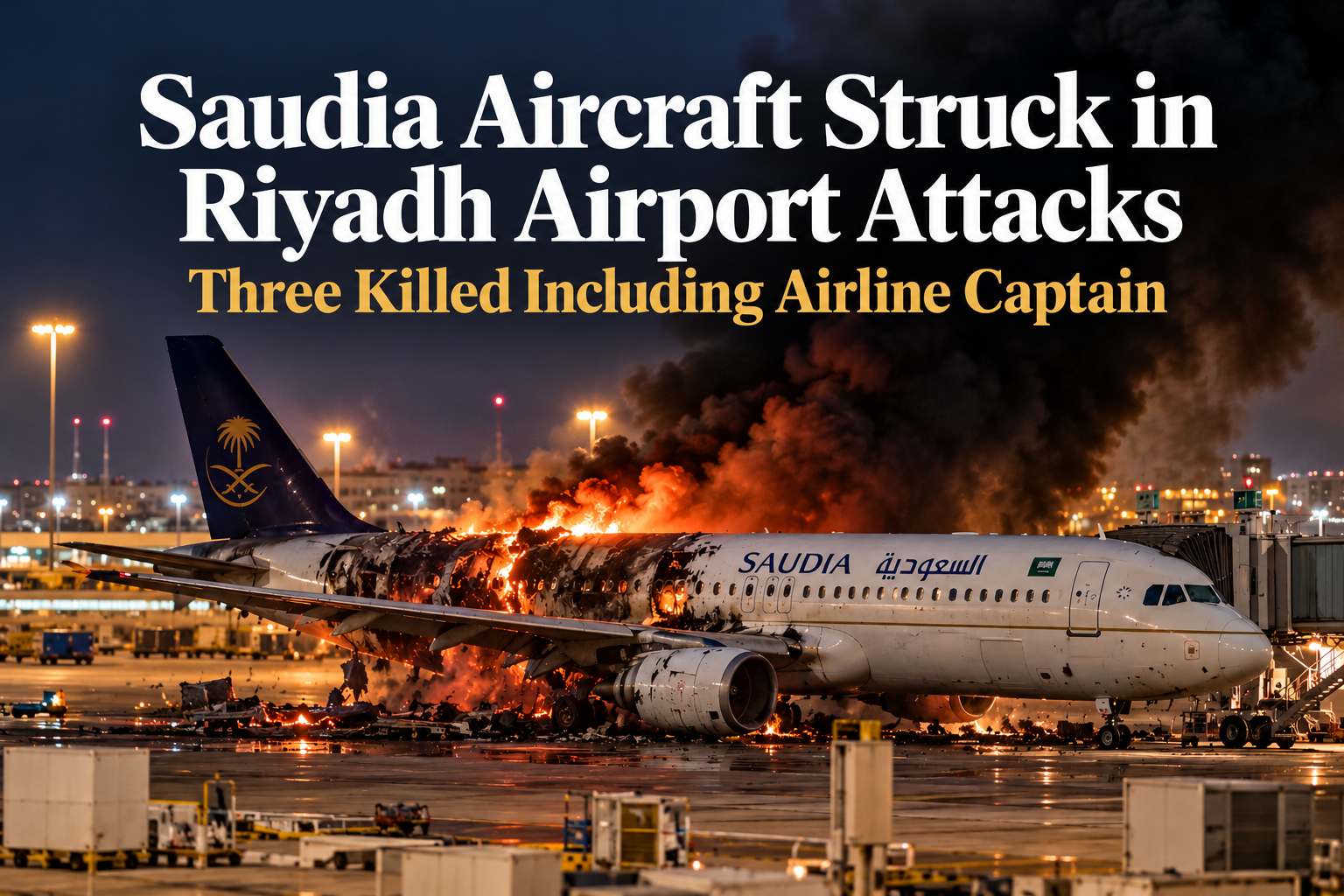
Saudia Aircraft Struck in Riyadh Airport Attacks, Three Killed Including Airline Captain
RIYADH, SAUDI ARABIA — 10 October 2026
Saudi Arabia’s aviation industry has been shaken by two attacks targeting King Khalid International Airport in Riyadh, leaving three Saudi nationals dead, including a Saudia airline captain, and several others injured.
The incidents, which occurred on Thursday, 8 October 2026, involved separate strikes against airport infrastructure and a commercial aircraft belonging to Saudi Arabia’s national flag carrier, Saudia.
Saudi Arabia’s General Authority of Civil Aviation (GACA) confirmed that the first attack targeted airport facilities, while the second struck a Saudia aircraft parked on the ground.
The airline subsequently confirmed that Captain Hamoud Ali Alkalthami was among those killed in the attacks.
Saudia paid tribute to the late captain, recognising his professional contributions and service to the airline.
Commercial Aircraft Damaged While Parked
According to Reuters, the Saudia aircraft sustained extensive damage after being struck by shrapnel or another projectile during the attack.
Sources familiar with the incident indicated that the aircraft caught fire while parked at an airport terminal.
Saudia confirmed that no passengers were aboard the aircraft at the time.
Although the aircraft sustained substantial damage, the incident was not an aviation accident involving an aircraft crashing during flight.
The precise extent of the damage and the aircraft’s operational status remain subject to further confirmation.
Three Fatalities and Multiple Injuries
Saudi aviation authorities confirmed that three Saudi citizens lost their lives, while several other individuals of different nationalities sustained injuries ranging from minor to serious.
Emergency response teams were deployed immediately, with injured individuals transferred to hospitals for medical treatment.
GACA stated that relevant authorities were conducting damage assessments and coordinating security measures to safeguard passengers, airport personnel and aviation infrastructure.
Regional Airspace Security Concerns Intensify
The attacks have raised serious concerns about the vulnerability of civilian aviation infrastructure amid escalating regional hostilities.
Yemen’s Houthi movement claimed responsibility for attacks targeting Riyadh airport. However, Saudi Arabia’s aviation authority did not identify those responsible in its initial official statement.
The incidents prompted heightened operational precautions and disruptions affecting several international airlines.
On 9 October, the European Union Aviation Safety Agency expanded its warning concerning operations in Saudi Arabian airspace, citing increased risks associated with the regional conflict.
The warning highlights the potential dangers posed to civilian aircraft by missile activity, falling debris and military interception operations.
For airlines operating between Asia, Europe and the Middle East, the developments reinforce the importance of continuous airspace risk assessment and operational contingency planning.
Airport Operations Resume
Despite the severity of the attacks, Saudi aviation authorities confirmed that operations at King Khalid International Airport subsequently resumed.
Saudia reported that its flights and airport operations had returned to normal by 6:00 p.m. local time on Thursday, 8 October.
The airline continues to monitor its flight schedules and communicate operational updates to passengers.
Aviation Security Beyond the Aircraft
The Riyadh incidents highlight the wider security challenges facing international civil aviation, particularly where commercial airports operate near areas affected by military conflict.
Beyond the immediate consequences for passengers and airline operations, attacks on civilian aviation infrastructure raise concerns regarding airport emergency preparedness, aircraft protection, crew safety and the resilience of international air transport networks.
For aviation authorities and operators across Asia-Pacific, the incident provides a timely reminder that aviation safety extends beyond flight operations to include the protection of aircraft, personnel and critical infrastructure on the ground.
As investigations and security assessments continue, the international aviation community will be watching developments closely.
MyAviation Magazine | Aviation Newsroom
Independent Aviation News & Industry Insights