
Five weeks into the US and Israeli military campaign against Iran, the global aviation industry is confronting a disruption of historic proportions. More than 50,000 flights have been cancelled across the Middle East since late February, according to aviation industry data, with some estimates placing the figure higher. Airspace closures, fuel price surges and infrastructure damage have combined to reshape commercial air travel in ways not seen since the onset of the Covid 19 pandemic in 2020.
The crisis has prompted stark warnings from industry leaders. Gediminas Ziemelis, founder of Lithuania headquartered Avia Solutions Group, one of the world’s largest aviation services companies, cautioned on 2 April that airlines in the region could begin filing for bankruptcy within weeks. His remarks echo a growing consensus that the financial pressures now bearing down on carriers are unsustainable without a swift resolution to the conflict.
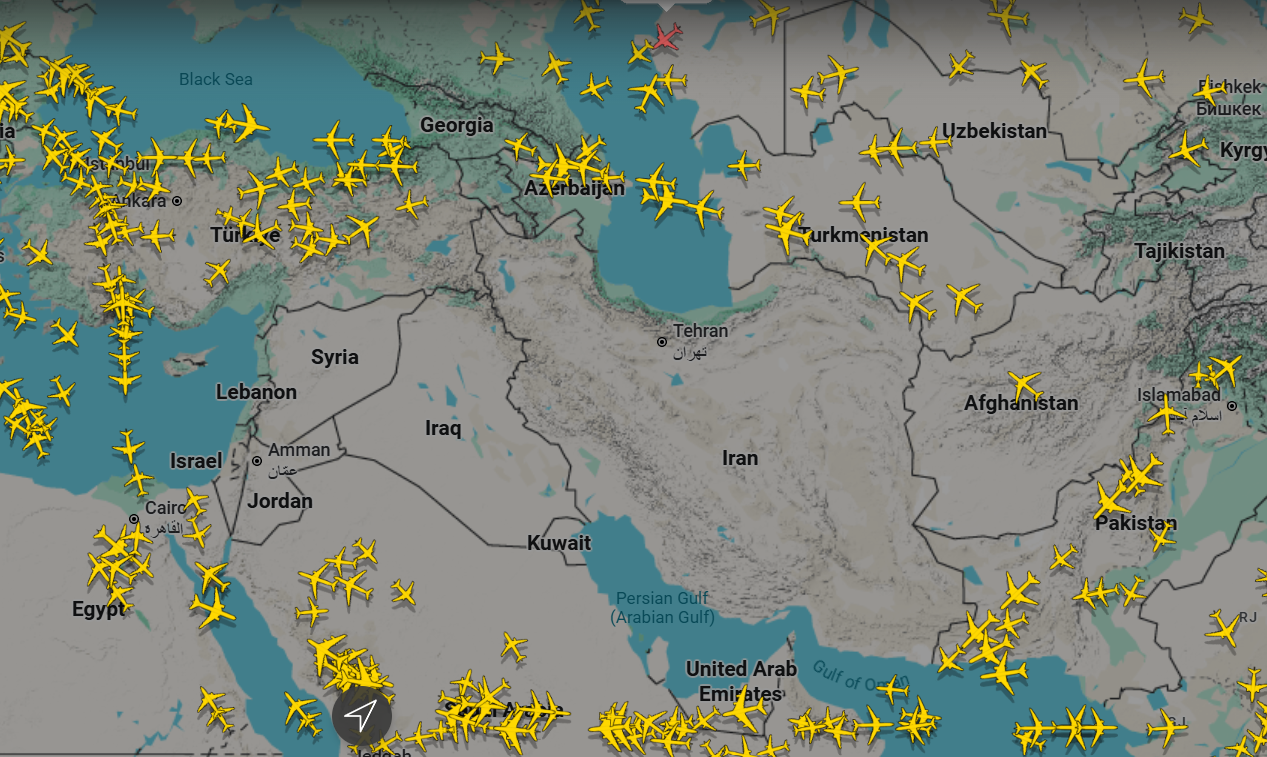
The operational picture across the Middle East remains severely constrained. Iranian, Iraqi, Kuwaiti and Syrian airspace is fully closed under NOTAM restrictions, while the flight information regions covering Israel, the UAE, Qatar and Bahrain are operating under tight controls with short notice full closures still possible. Dubai International Airport, once handling over 1,200 flights daily, is running at roughly 60 per cent of pre conflict capacity. Kuwait International Airport remains closed to all commercial operations. Qatar Airways has parked approximately 43 per cent of its fleet, while Emirates is operating at roughly half its normal schedule.
The European Union Aviation Safety Agency (EASA) renewed its Conflict Zone Information Bulletin on 28 March, extending its advisory to avoid airspace over Iran, Israel and parts of the Gulf through 10 April. EASA Executive Director Florian Guillermet acknowledged the scale of the disruption but stressed that safety must take precedence. The agency has also flagged the compounding effect of airspace congestion, as traffic previously routed through the Gulf is being funnelled into narrower corridors over Azerbaijan and Central Asia, corridors already under pressure from the ongoing Russia Ukraine conflict and instability along the Pakistan Afghanistan border.
Fuel Crisis Amplifies the Damage
The disruption extends well beyond routing. Jet fuel benchmarks have surged more than 60 per cent since late February, with spot prices quoted in the range of USD 150 to USD 200 per barrel. With fuel typically accounting for a quarter to a third of airline operating costs, the combined effect of longer routes and higher prices is squeezing margins across the industry. Brent crude briefly touched USD 119 per barrel following Iranian retaliatory strikes on energy sites across the Gulf, including a Saudi oil refinery and Qatari gas facilities.
War risk insurance premiums have also spiked dramatically, rising between 50 and 500 per cent depending on the carrier and the route. Some smaller operators are reportedly absorbing additional insurance costs of up to USD 200,000 per day. Rerouted flights are adding two to six hours of flying time on key Europe to Asia corridors, burning additional fuel and compounding crew scheduling challenges.
Asia Pacific Carriers Navigate the Fallout
The ripple effects have reached deep into the Asia Pacific. Cathay Pacific has extended its suspension of flights to Dubai and Riyadh through 31 May. Singapore Airlines has cancelled its Dubai services for the remainder of April. Japan Airlines, Philippine Airlines, IndiGo, Air India and Scoot have all suspended or curtailed Gulf routes through at least 30 April.
Cathay Pacific has significantly increased its fuel surcharge, while Singapore Airlines and Scoot have implemented broad fare increases. The Association of Asia Pacific Airlines (AAPA) has warned that the outlook for the region’s carriers is now significantly clouded, with Director General Subhas Menon noting that all airlines, regardless of business model, are being affected by constrained fuel supplies, restricted airspace and disrupted supply chains.
In Malaysia, the picture is more measured but not immune. Malaysia Aviation Group (MAG), the parent company of Malaysia Airlines, reported its 2025 full year results on 2 April, revealing a net profit after interest and tax of MYR 137 million, more than double the previous year. Revenue rose six per cent to MYR 14.5 billion. MAG President and Group CEO Nasaruddin A. Bakar confirmed the group has no plans to adjust its fleet or cut capacity, with the exception of Doha services which remain suspended through 15 April. Importantly, MAG has secured sufficient jet fuel from domestic and international suppliers to cover operations through the end of 2026, a strategic buffer that sets it apart from less hedged competitors. The group also expects to take delivery of 10 new aircraft this year, comprising seven Boeing 737 MAX narrowbodies and three Airbus A330neos.
However, Nasaruddin acknowledged that market volatility stemming from the Middle East conflict could weigh on MAG’s performance in 2026. Aviation analyst Shukor Yusof has noted that the conflict may also dampen the Visit Malaysia 2026 campaign, as fewer European and American travellers are expected to fly to Asia via Gulf hubs.
Recovery Timeline Uncertain
Airlines across the region had planned approximately 26,000 flights for the first week of April. That figure has been cut to around 16,000, a reduction of nearly 40 per cent. European carriers including British Airways, Lufthansa Group and Air France have extended suspensions of Gulf services through at least the end of April, with some routes shelved until the end of May or longer.
At the same time, carriers not directly exposed to the conflict are moving swiftly to capture displaced demand. Lufthansa is adding frequencies on Munich to Singapore and Frankfurt to Cape Town. Air France has increased services from Paris Charles de Gaulle to Bangkok, Singapore, Delhi and Mumbai. Air India has added over 10,000 incremental seats on routes linking New Delhi and Mumbai with London, Frankfurt, Zurich and Toronto.
Industry consultants expect a full recovery to take months at best, with one analysis suggesting normal operations may not resume before the end of June even under optimistic scenarios. The EASA advisory renewal decision on 10 April will be a key signal: if extended, it would effectively lock in the current rerouting arrangements through the northern hemisphere summer season, embedding higher fares and longer journey times as the new baseline for intercontinental travel.
For now, the global aviation system is operating in crisis mode, and the cost, measured in cancelled flights, stranded passengers, grounded fleets and billion-dollar losses, continues to mount with each passing week.