
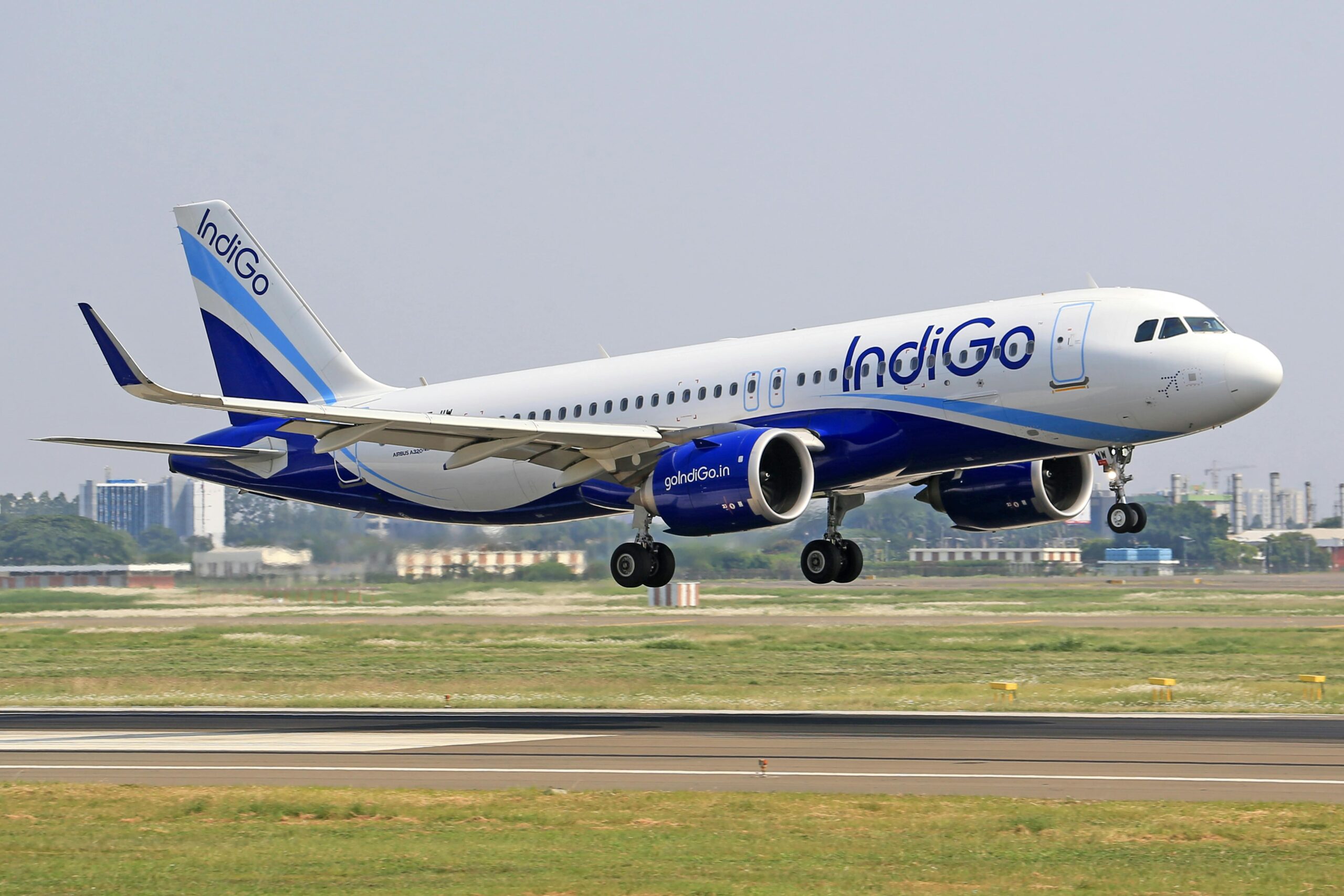
A passenger has been booked by Hyderabad airport police after allegedly filming female cabin crew in an objectionable manner and behaving disruptively on an IndiGo flight from Hyderabad to Udaipur, in an incident that has renewed concern over passenger misconduct on Indian flights.
According to the airline’s complaint, the incident took place at around 7:45 a.m. on 24 April at the domestic terminal of Rajiv Gandhi International Airport. The accused, described by police as a businessman from Tamil Nadu, was allegedly under the influence of alcohol. Police said he used his mobile phone to zoom in and photograph female crew members, focusing on their legs, faces and bodies.
The complaint, filed by an IndiGo representative, also alleged that the passenger used abusive language and behaved inappropriately towards the person seated next to him, prompting a complaint from a co-passenger. Crew members reportedly warned him repeatedly, but the disruptive behaviour continued.
Airport staff deboarded the passenger before takeoff and handed him over to RGIA Airport Outpost police. A case has been registered under Section 79 of the Bharatiya Nyaya Sanhita, which deals with words, gestures or acts intended to insult the modesty of a woman. “We have registered a case and issued a notice to the accused as per law,” SIK Harika of RGIA Airport police said in remarks reported by local outlets.
Video clips said to be from the flight have circulated on social media. News organisations have approached the footage with caution given the privacy and dignity considerations involved.
The episode is the latest in a series of incidents involving allegedly unruly passengers on Indian flights. In recent years, airlines and the Directorate General of Civil Aviation have reported a steady volume of cases involving intoxication, verbal abuse, harassment of crew, and in some instances physical altercations. Several incidents have drawn national attention and prompted public debate over how the aviation system handles disruptive behaviour.
India introduced a national no-fly list in September 2017, the first of its kind in the world, administered by the DGCA in partnership with airlines. The framework, set out in Civil Aviation Requirement Section 3, Series M, Part VI, classifies unruly behaviour into three levels. Level 1 covers verbal harassment, inappropriate gestures or unruly inebriation and can attract a ban of up to three months. Level 2 covers physically abusive behaviour, including inappropriate touching, with bans of up to six months. Level 3, which involves life threatening conduct or attempts to damage aircraft systems, attracts a minimum ban of two years. Repeat offences double the previous ban period.
Under the framework, the pilot in command files a complaint with the airline, which then refers the case to an internal committee chaired by a retired district or sessions judge. The committee must rule within 30 days. During that period, the airline can independently bar the passenger from its flights. A passenger placed on the list can appeal within 60 days to a panel chaired by a retired High Court judge, with further recourse available through the courts. The full list of banned passengers is published on the DGCA website.
The system has limits. A no-fly ban imposed by one airline binds only that airline; other carriers may choose to honour it but are not required to do so. Offences that occur on the ground at an airport, rather than onboard, fall outside the framework and are handled by the relevant security agency. In the Hyderabad case, the alleged conduct occurred on the aircraft before departure, placing it within the framework’s scope, although any decision on a flying ban will rest with IndiGo’s internal committee in due course.
Indian carriers have repeatedly reiterated a zero-tolerance stance on harassment of cabin crew, who are responsible for both customer service and safety on board. Industry observers have pointed to alcohol consumption, both before and during flights, as a recurring factor in onboard disturbances. The DGCA has previously placed dozens of passengers on the no-fly list for offences ranging from refusing to follow crew instructions to assault.
High profile cases in recent years have included the prolonged ban of a politician who assaulted an Air India staff member in 2017, and a 2022 case in which an Air India passenger was placed on the no-fly list and prosecuted for urinating on a fellow passenger on a New York to Delhi flight. The latter case prompted a financial penalty against the airline and the suspension of the pilot in command’s licence over the handling of the incident, illustrating that responsibility under Indian rules can extend beyond the offending passenger.
In the Hyderabad case, IndiGo has not publicly stated whether it intends to refer the matter to its internal committee for a possible flying ban, in addition to the police case already registered. The airline did not immediately respond to questions about disciplinary follow up. The accused faces possible legal proceedings under the Bharatiya Nyaya Sanhita, with penalties for the cited section that can include imprisonment, a fine, or both, on conviction.
For cabin crew unions and aviation safety advocates, the incident underscores a familiar concern: that despite a clear legal framework, the day-to-day burden of managing unruly behaviour continues to fall on a small number of crew, often working in confined cabins with limited recourse in the air. A full picture of how this case is handled, both criminally and within the no-fly list system, will become clearer in the weeks ahead.