
International aviation authorities are examining the circumstances surrounding the September 30 cockpit incident, while a separate criminal investigation continues in the United Arab Emirate
Saudi Arabia is investigating the emergency landing of flydubai flight FZ1073 following a serious cockpit incident on 30 September 2026, with international aviation safety authorities becoming involved in the inquiry.
According to Reuters, three people familiar with the matter said Saudi Arabia had notified relevant international aviation agencies of its intention to conduct a safety investigation under established international procedures.
The United States National Transportation Safety Board (NTSB) subsequently confirmed to Reuters that it had assigned a representative to the investigation.
The development follows an earlier announcement by Saudi Arabia’s National Transport Safety Center (NTSC), which confirmed that investigators had begun examining the emergency landing in Tabuk.
The aviation safety investigation is separate from criminal proceedings being conducted by authorities in the United Arab Emirates.
Emergency Landing in Saudi Arabia
Flydubai flight FZ1073 was travelling from Dubai to Tel Aviv when a serious incident occurred inside the cockpit while the aircraft was operating in Saudi Arabian airspace.
The Boeing 737 MAX subsequently diverted to Prince Sultan bin Abdulaziz International Airport in Tabuk, Saudi Arabia, where it landed safely.
Saudi Arabia’s National Transport Safety Center announced that it had dispatched investigators to examine the circumstances surrounding the emergency landing.
The investigation involves collecting relevant information, examining available evidence and assessing aviation safety considerations in coordination with the authorities concerned.
On 7 October, Reuters reported that Saudi Arabia was proceeding with an international aviation safety investigation.
However, the NTSC had not independently confirmed the full international scope described by Reuters’ sources at the time of that report.
United States Assigns Investigation Representative
The United States National Transportation Safety Board confirmed to Reuters that it had assigned a representative to the investigation.
The aircraft involved was a Boeing 737 MAX, designed and manufactured in the United States.
International aviation investigation procedures provide for participation by relevant states according to their connection with the aircraft and the occurrence.
Such cooperation allows investigators to obtain technical expertise, operational information and other evidence that may assist their work.
The NTSB’s participation does not indicate that an aircraft defect or technical malfunction contributed to the incident.
No final aviation safety findings have established such a cause.
Understanding International Aviation Safety Investigations
International aviation safety investigations are guided by standards and recommended practices established under Annex 13 to the Convention on International Civil Aviation.
Their primary purpose is to identify circumstances and contributing factors that may provide lessons for improving aviation safety.
Unlike criminal investigations, aviation safety inquiries are not intended to determine criminal guilt or assign legal liability.
This distinction becomes particularly important when an aviation occurrence involves allegations of deliberate interference.
Criminal investigators may examine alleged offences and individual responsibility, while aviation safety investigators focus on circumstances relevant to preventing future incidents.
The two processes may proceed separately, subject to applicable legal and investigative arrangements.
The existence of parallel investigations does not mean that either has reached its final conclusions.
Separate Criminal Investigation in the UAE
Authorities in the United Arab Emirates are conducting a separate criminal investigation into the incident.
According to Reuters, the UAE prosecutor general characterised the alleged conduct of the co-pilot as a terrorist attack.
The allegations concern an incident in which the co-pilot reportedly attacked the captain during the flight.
These matters remain subject to the relevant criminal investigation and legal process.
The aviation safety inquiry has a different purpose and should not be interpreted as establishing criminal responsibility.
Similarly, the criminal allegations do not establish that flydubai’s aircraft systems, operational procedures or organisational safeguards were deficient.
International Cooperation
The investigation involves an occurrence with connections to several aviation jurisdictions.
The aircraft was operated by a Dubai-based airline, registered in the United Arab Emirates, manufactured in the United States and involved in an emergency landing in Saudi Arabia.
Reuters also reported that Israel’s Aircraft Safety Investigation Authority had expressed willingness to participate in the Saudi-led investigation.
However, its director indicated that Israel had not received an invitation to participate at the time of the report.
International aviation safety cooperation allows relevant authorities to exchange technical information and examine circumstances that may have implications beyond a single operator or jurisdiction.
Such cooperation remains an important part of the global aviation safety framework.
Cockpit Security and Operational Considerations
The incident has also renewed attention to cockpit security, crew coordination and the management of serious in-flight emergencies.
Commercial aviation relies on established procedures governing flight crew responsibilities, cockpit access, operational decision-making and emergency response.
Investigators may consider matters relevant to these areas when examining the occurrence.
However, potential areas of examination should not be confused with confirmed safety deficiencies.
No final investigation findings have established failures in flydubai’s recruitment procedures, training arrangements, cockpit security measures or aircraft systems.
Any conclusions concerning contributing factors must be supported by evidence obtained during the investigation.
Importance for International Aviation
Aviation safety investigations have historically contributed to improvements in aircraft operations, flight crew procedures, technical standards and regulatory oversight.
Their effectiveness depends on objective examination of evidence and the identification of practical safety lessons.
The investigation into flight FZ1073 may provide insights into how international aviation safety procedures operate when an incident involves suspected deliberate actions.
It also highlights the importance of distinguishing technical safety inquiries from criminal proceedings.
For airlines, regulators and aviation safety professionals, any eventual findings may offer lessons relevant to operational resilience and emergency preparedness.
However, it would be premature to anticipate particular recommendations before investigators complete their work.
Awaiting Official Findings
The circumstances surrounding flydubai flight FZ1073 remain under investigation.
Saudi Arabia’s National Transport Safety Center has confirmed its investigation into the emergency landing.
Reuters has separately reported that an international aviation safety inquiry is proceeding, while the NTSB has confirmed assigning a representative.
Authorities in the United Arab Emirates are pursuing a separate criminal investigation.
As of 8 October 2026, no final aviation safety findings have been publicly established.
The aviation industry’s attention will therefore remain focused on the investigative process and any subsequent safety recommendations.
The FZ1073 case underscores the importance of independent investigations, international technical cooperation and the careful distinction between established facts, reported allegations and conclusions supported by evidence.
MyAviation Magazine | Aviation Safety & Investigation
8 October 2026
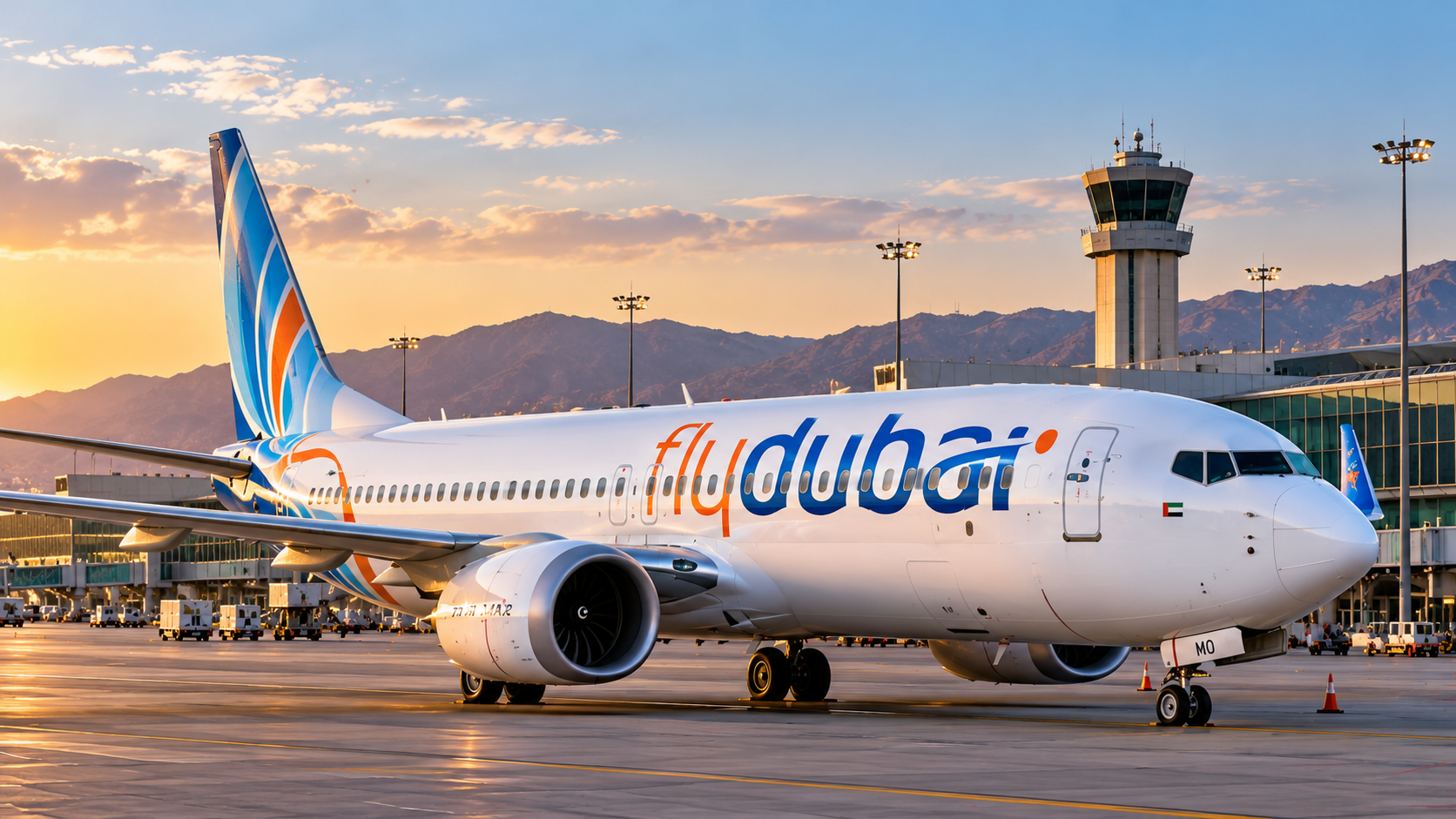
Image caption: AI-generated illustration of a flydubai aircraft. Not an actual photograph of flight FZ1073.