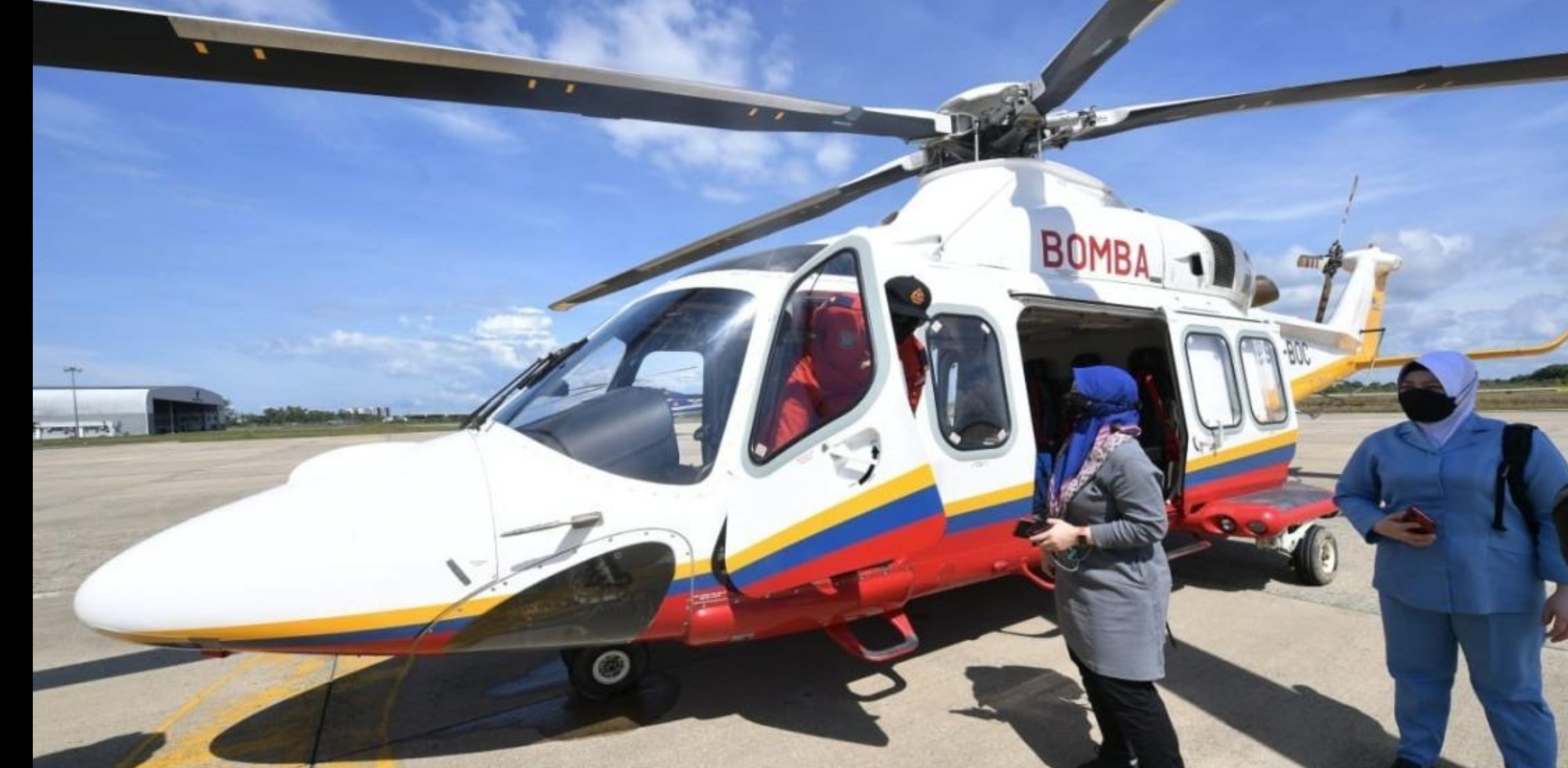
The Sarawak Fire and Rescue Department (Bomba) successfully airlifted two critically ill patients from Miri to Kuching on 10 November 2026, using a Mi-171 helicopter to facilitate their transfer for specialised medical treatment.
The patients, a 17-year-old boy and an elderly woman, were transferred from Miri Hospital to Sarawak General Hospital after medical personnel determined that both required specialist care.
The mission had initially been scheduled for 9 November but was postponed because of unfavourable weather conditions along the flight route.
Two Patients Requiring Specialised Care
The teenage patient had sustained a C2 fracture-dislocation involving the upper cervical spine, accompanied by acute neurological impairment. His condition required urgent assessment and specialised treatment.
The elderly patient was diagnosed with severe ascending cholangitis, a serious infection of the bile ducts. According to Bomba’s statement as reported by The Borneo Post, she was haemodynamically unstable and required continuous monitoring during transport. She received supplemental oxygen through nasal prongs at three litres per minute.
Medical personnel accompanied both patients throughout the flight to maintain continuity of care.
Helicopter Transfer Completed Safely
The mission was conducted by Bomba’s Sarawak Regional Air Unit under the leadership of Senior Fire Superintendent Sofian Ahmed @ Ibrahim.
Operating under the callsign BOMBA 05, the Mi-171 helicopter departed Miri at 9:52 AM and arrived at Kuching International Airport at 12:57 PM.
The operation involved 10 aviation personnel and two medical officers. Following arrival, both patients were handed over to the receiving medical team for further treatment.
The helicopter subsequently departed Kuching International Airport at 2:02 PM and arrived at Bomba’s headquarters in Tabuan Jaya at 2:08 PM. The overall operation concluded safely at approximately 2:10 PM.
Maintaining Access to Critical Healthcare
The mission highlights the importance of aeromedical transport in supporting access to specialised healthcare across Sarawak, where geographical distances and operational conditions can complicate patient transfers.
It also demonstrates the need to balance clinical urgency with aviation safety. Weather conditions, aircraft suitability and medical supervision remain important considerations when transporting critically ill patients.
The successful transfer reflects the coordination between Bomba’s aviation personnel, hospital medical teams and receiving healthcare facilities in maintaining access to essential medical services.