
AVIATION DESK |
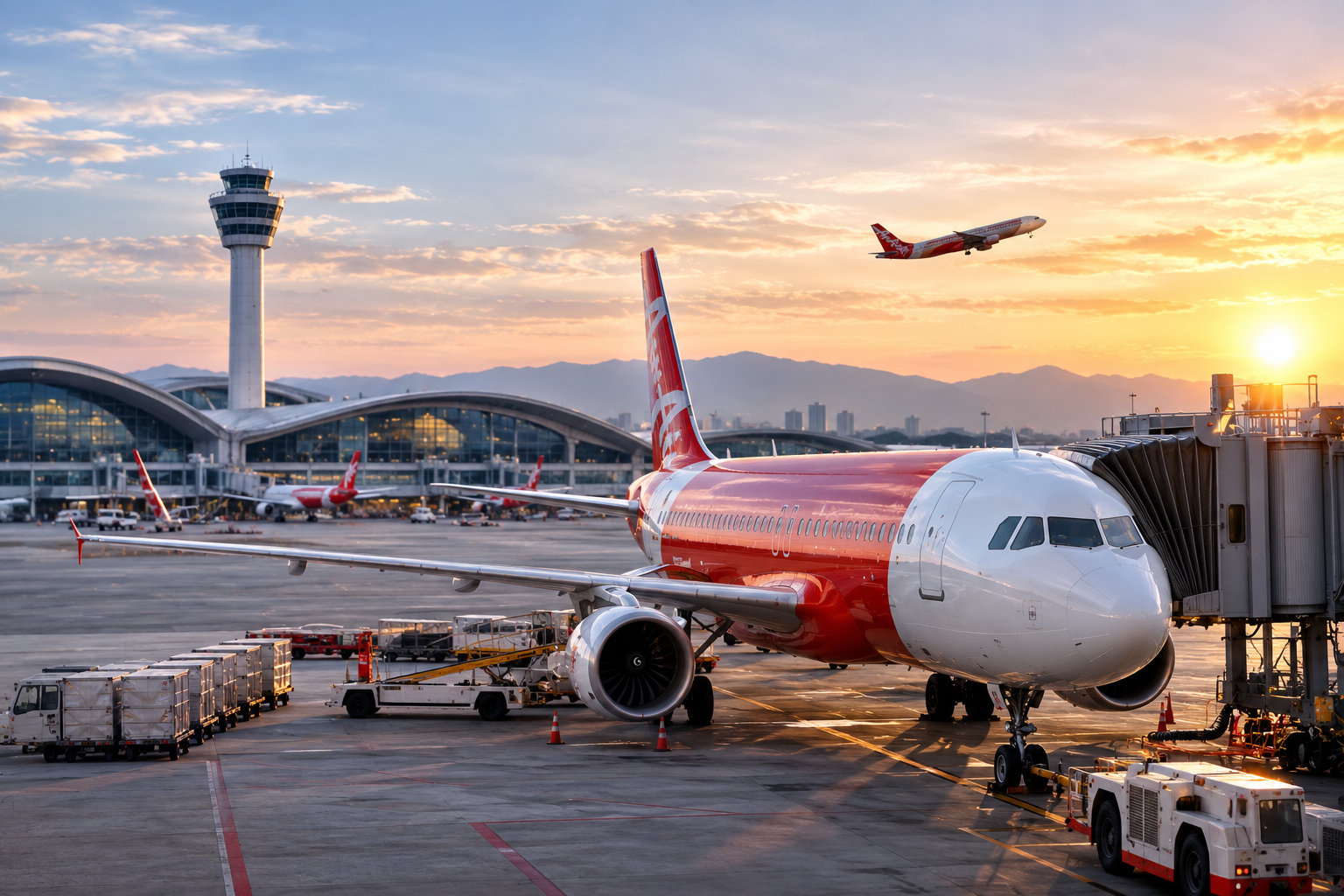
Malaysia’s decision to assess AirAsia’s funding requirements has placed renewed attention on the financial resilience of one of Southeast Asia’s largest low-cost airline groups , and on the wider strategic value of aviation connectivity to the country.
The Ministry of Finance has appointed aviation consultancy Alton Aviation Consultancy to assess AirAsia’s funding needs as the airline pursues fresh financing, Reuters reported, citing people familiar with the matter. The assessment is understood to consider AirAsia’s wider economic importance, including employment and its role in providing affordable regional connectivity.
The development does not, however, mean that a government bailout has been decided.
According to Reuters, there were no plans at the time of reporting for the government to bail out AirAsia or provide a guarantee for its fundraising. The eventual form of any government involvement, if there is one, remains uncertain.
For Malaysia’s aviation industry, the significance of the review extends beyond the financing requirements of a single airline.
AirAsia has played a major role in reshaping regional travel since the expansion of its low-cost model more than two decades ago. Its network helped make short-haul international travel accessible to a wider passenger market while strengthening connections between Kuala Lumpur and cities throughout Southeast Asia.
That connectivity has consequences beyond airline operations.
Tourism, airports, ground handling, aircraft maintenance, hospitality and other parts of the aviation supply chain all depend to varying degrees on consistent passenger traffic and airline capacity.
AirAsia is currently seeking up to US$1 billion from international debt markets together with RM700 million in domestic credit facilities. The airline has said the fundraising is principally intended to restructure and refinance existing debt and consolidate its balance sheet under financing arrangements with longer maturities and potentially lower costs.
The financing effort comes during a challenging operating environment for airlines.
AirAsia reported a net loss of RM831 million for the quarter ended June 30, with higher jet-fuel costs linked to the Middle East conflict and foreign-exchange losses contributing to the result.
The airline has nevertheless emphasised that its strategy is focused on strengthening the business rather than pursuing growth at any cost.
AirAsia has outlined plans to return 25 older, less fuel-efficient aircraft as part of efforts to reduce lease obligations and non-fuel costs ahead of future aircraft deliveries. It has also said it is placing greater emphasis on route profitability instead of simply maximising aircraft utilisation.
That approach reflects a wider reality confronting the airline industry.
High passenger numbers and strong load factors do not automatically translate into strong financial performance. Fuel prices, financing costs, aircraft leases, foreign exchange movements, maintenance expenses and competitive fares can substantially influence the economics of an airline even when demand remains healthy.
For low-cost carriers, where maintaining a disciplined cost structure is fundamental to the business model, those pressures can be particularly significant.
AirAsia’s importance to Malaysia also makes the funding discussion strategically relevant.
Malaysia occupies a favourable geographic position at the centre of Southeast Asia, surrounded by some of the region’s largest and fastest-growing aviation markets. Kuala Lumpur has developed into an important regional connecting point, with low-cost aviation forming a significant part of that network.
Competition, however, continues to intensify.
Singapore is strengthening Changi’s international hub position, Vietnam’s aviation market is expanding rapidly, Thailand remains a major tourism and aviation centre, while Indonesia benefits from Southeast Asia’s largest domestic passenger market.
Malaysia’s ability to compete within that environment depends on more than airport infrastructure.
It also requires commercially sustainable airlines capable of maintaining extensive regional and international networks.
This is where the AirAsia funding review becomes a broader aviation story.
Airlines remain commercial enterprises and ultimately need business models capable of generating sustainable returns. But their networks also support tourism, employment, investment and national connectivity.
Balancing those two realities is increasingly important for governments and aviation policymakers.
Any potential involvement by the Malaysian government would therefore need to be assessed carefully against commercial considerations and the wider economic value generated by connectivity.
For now, AirAsia continues to pursue its financing strategy while adjusting its fleet and network as market conditions evolve.
The outcome will be closely watched by investors and the wider aviation industry.
But whatever form the next stage takes, the current review reinforces a larger point for Malaysian aviation: connectivity has strategic value, but sustainable connectivity ultimately depends on financially resilient airlines.
For Malaysia, strengthening its position as an aviation hub will therefore require both — extensive regional connectivity and the commercial discipline necessary to sustain it.
My Aviation | Aviation Desk