
Boeing has overtaken its European rival Airbus in commercial aircraft deliveries for the first quarter of 2026, marking the first time the American manufacturer has led a quarterly delivery race since early 2018, in what industry analysts are calling a significant signal that Boeing’s long running recovery effort is gaining traction.
The American aerospace giant reported 143 commercial aircraft deliveries in the three months to 31 March 2026, alongside 30 defence, space and security platforms, for a total of 173 deliveries. Airbus, by comparison, delivered 114 commercial aircraft over the same period. The figures represent a 10.9 per cent year on year increase for Boeing compared with the 156 total deliveries it recorded in Q1 2025.
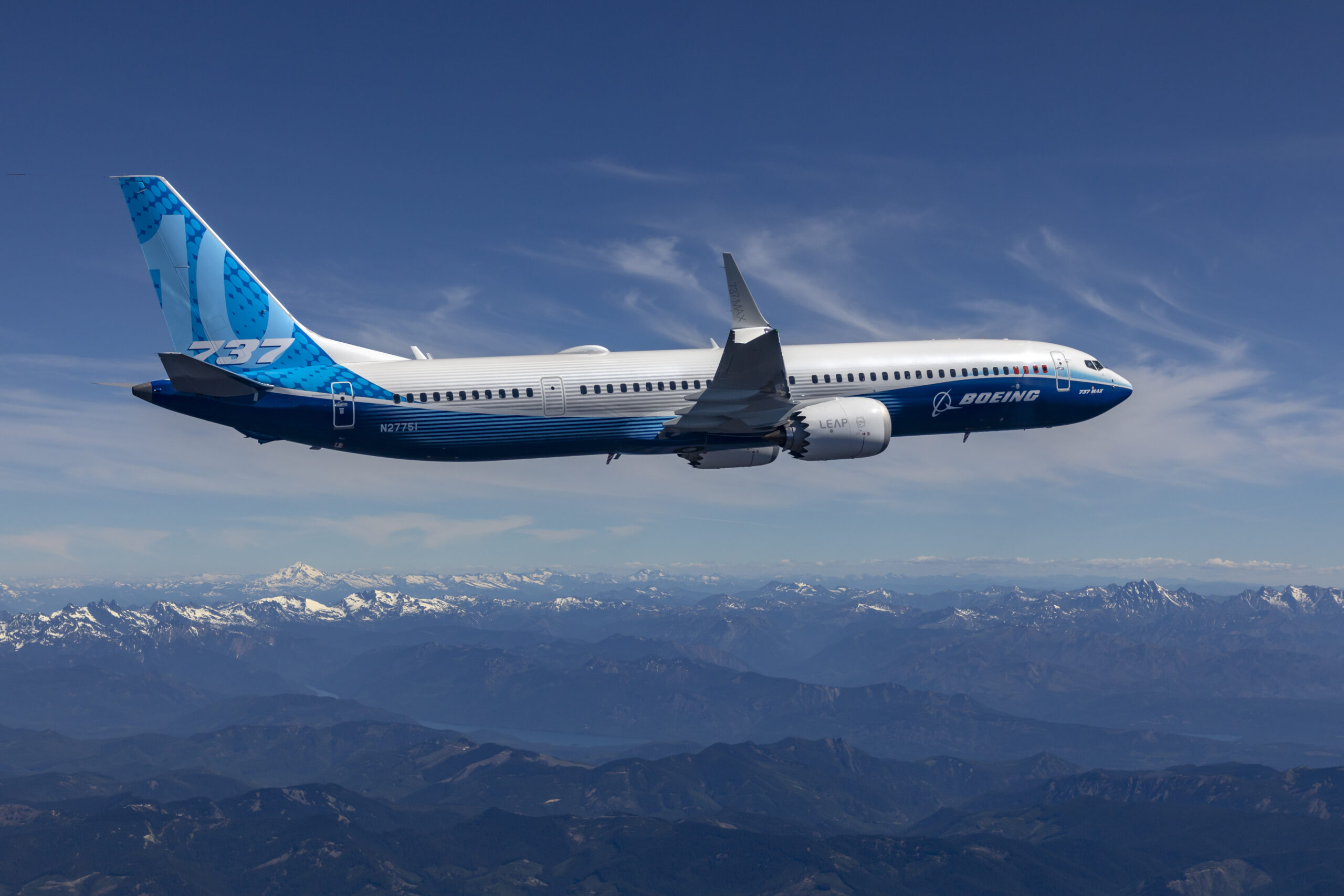
Boeing’s commercial output was led by 114 deliveries of the 737 family, the manufacturer’s narrowbody workhorse, alongside six 767s, eight 777s and 15 787 Dreamliners. March deliveries slowed slightly after Boeing identified wiring issues in some 737 MAX aircraft, pushing approximately 10 handovers into the second quarter, but the underlying production trajectory has stabilised meaningfully compared with the troubled years following the 737 MAX grounding crisis.
The shift in the delivery race carries broader strategic significance. Airbus has dominated the commercial aircraft delivery rankings every quarter since Boeing was forced to halt 737 MAX production in 2018 following the Lion Air Flight 610 and Ethiopian Airlines Flight 302 crashes, which together claimed 346 lives. The American manufacturer’s deliveries collapsed to 380 in 2018, and Airbus has held the production lead consistently since.
The reasons for Boeing’s renewed momentum and Airbus’s relative slowdown are structural rather than cyclical. Airbus has been constrained by ongoing engine supply issues, particularly with Pratt & Whitney, which is in the process of repairing approximately 1,200 GTF engines containing a manufacturing flaw. The repair programme has slowed Pratt & Whitney’s production of new engines, leaving Airbus with a backlog of completed airframes awaiting power plants before they can be delivered to customers.
Boeing, meanwhile, has benefited from sustained operational improvements under chief executive Kelly Ortberg, whose multi year cultural and quality reset has begun translating into more predictable deliveries. The manufacturer is targeting approximately 708 deliveries for full year 2026, against Airbus’s projected 900 to 1,044.
Boeing’s defence business also recorded growth, with 30 deliveries in Q1 2026 versus 26 in the same quarter of 2025, a 15.4 per cent increase. Growth came primarily from remanufactured rotorcraft and tanker deliveries, including the AH-64 Apache and KC-46 programmes.
Despite the quarterly win, analysts caution that Boeing has not regained overall industry leadership. Airbus retains a substantially larger order backlog and continues to dominate the narrowbody segment through the A321neo. The European manufacturer also recorded 398 net new orders in the first quarter, a strong intake that reinforces its long term position even as deliveries lag.
The 2026 competitive picture is increasingly being framed as a reset year by industry observers, with both manufacturers facing different but equally severe execution challenges. For Boeing, the year will be defined by certification milestones, particularly for the 737 MAX 7, the 737 MAX 10 and the long delayed 777X widebody. For Airbus, the priority is resolving the engine supply bottleneck and stabilising production at higher rates.
The delivery shift also has implications for airline customers across Asia Pacific, where carriers such as Malaysia Airlines, Singapore Airlines, IndiGo and Cathay Pacific operate large mixed fleets and depend on predictable delivery schedules to execute network expansion plans. Boeing will report its full first quarter financial results on 22 April, providing further context on how the delivery numbers translate into cash flow and earnings.