

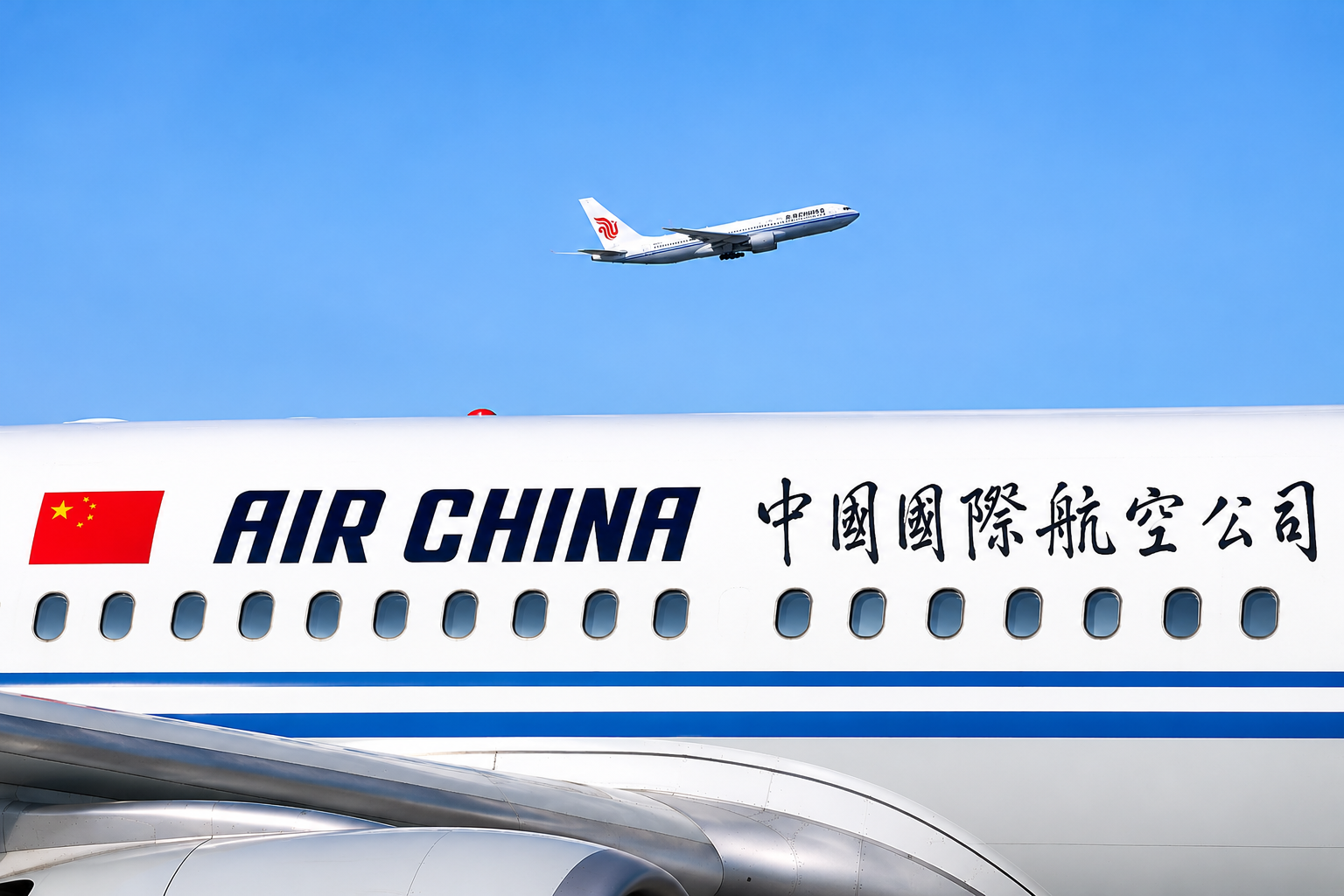
China’s three largest airlines are facing the prospect of full-year losses as rising jet fuel prices, weak domestic airfares and weather-related disruptions weigh on their financial performance.
Air China, China Eastern Airlines and China Southern Airlines reported sharply weaker third-quarter results despite the period traditionally benefiting from strong summer travel demand.
Air China’s third-quarter net profit fell 92.6% year-on-year to 270.6 million yuan, while China Eastern recorded a 98.2% decline to 64 million yuan.
China Southern reported a net loss of 609 million yuan, reversing a profit of 3.84 billion yuan during the corresponding quarter in 2025.
All three carriers also recorded losses for the first nine months of 2026, compared with profits during the same period last year.
Rising Costs and Domestic Competition
Higher aviation fuel prices have significantly increased operating expenses. Chinese airlines generally hedge a smaller proportion of their fuel requirements than many Asian and European competitors, leaving them more exposed to price fluctuations.
Competition within China’s domestic aviation market has added further pressure, with weaker ticket yields limiting airlines’ ability to recover higher costs.
The country’s extensive high-speed rail network also remains a competitive alternative on several domestic routes.
Meanwhile, typhoon-related disruptions affected airline operations during the reporting period.
Challenging Outlook for 2026
According to analyst estimates compiled by LSEG and reported by Reuters, Air China and China Eastern are heading towards a seventh consecutive annual net loss since the COVID-19 pandemic.
China Southern, which returned to annual profitability in 2025, is also projected to record a full-year loss.
Although domestic airfares showed signs of improvement following China’s October Golden Week holiday, analysts expect fuel costs to remain a significant challenge during the traditionally weaker fourth quarter.
The financial outlook underscores the difficulties facing China’s major airlines as they balance operating expenses, competitive pricing and passenger demand.
With the final quarter underway, attention is turning to whether stronger yields and capacity management can help carriers limit their annual losses.