
A Swiss International Air Lines flight bound for Zurich was forced to abandon its takeoff at Indira Gandhi International Airport in the early hours of Sunday after an issue with one of its engines. All 228 passengers, four infants and 13 crew members were evacuated from the aircraft, and six passengers were subsequently undergoing medical evaluation, the airline said.
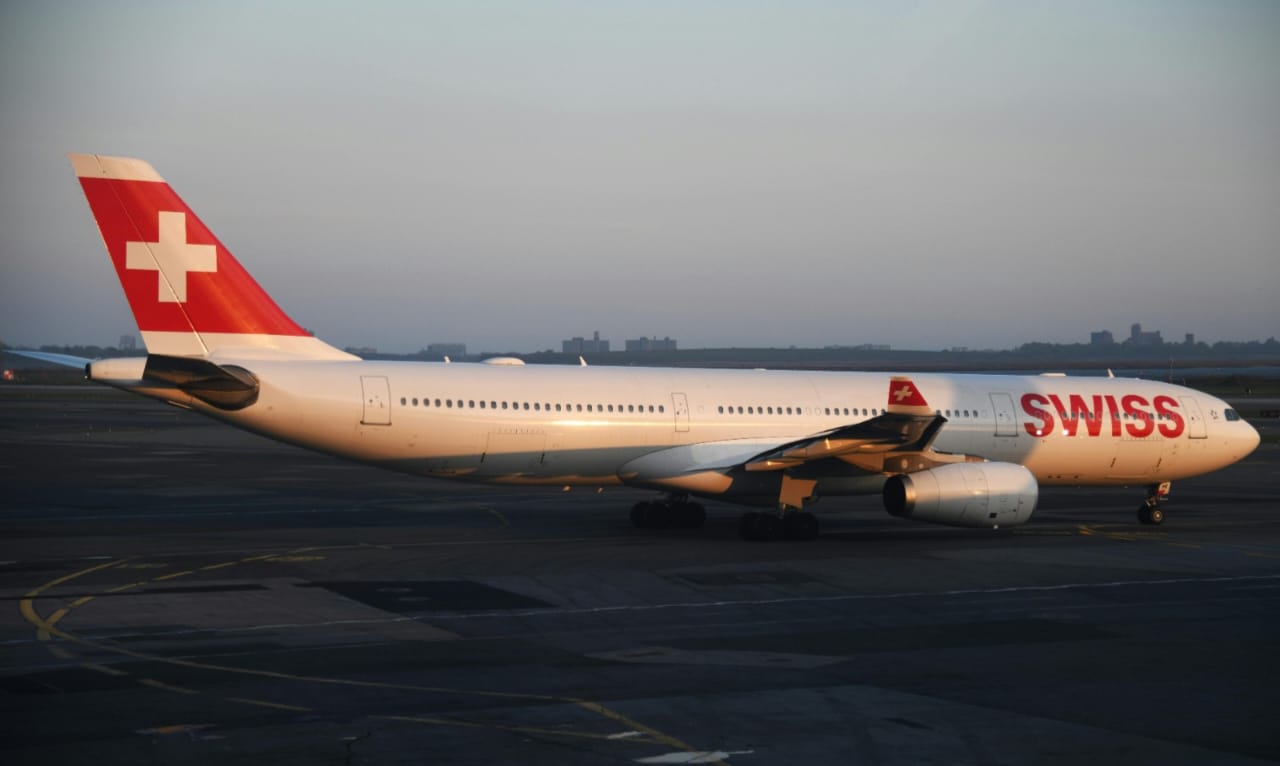
The aircraft, an Airbus A330-300 with registration HB-JHK, was operating as flight LX147 to Zurich. According to a statement from SWISS, an issue occurred with one of the engines shortly after 1:00 a.m. local time as the aircraft was on its takeoff roll. The crew rejected the takeoff and, after assessing the situation, decided as a precaution to evacuate the aircraft.
Indian media outlets, including the Economic Times and Business Standard, reported that one of the aircraft’s engines caught fire during the takeoff roll. SWISS, in its own statement, did not confirm a fire and described the event only as an engine issue. The cause and full sequence of events have not yet been officially established.
Most passengers exited the aircraft using the emergency slides. For a small number of individuals who were unable to use the slides, stairs were provided, the airline said. All crew members were unharmed. The six passengers receiving medical attention were assessed at the airport; further details about the nature of the injuries have not been released.
Indira Gandhi International Airport, India’s busiest, said earlier on social media platform X that it had declared an emergency following the incident. The airport has four operational runways. Runway operations have since resumed, and other flights at the airport were reportedly on schedule by later in the day.
SWISS described the incident as distressing for everyone involved. Ground staff and Lufthansa Group colleagues are assisting passengers with rebooking and hotel accommodation, and the airline said individual onward travel solutions had been found for all guests. A crisis task force has been activated, and technical specialists have been dispatched to Delhi to inspect the aircraft and help determine the cause.
Oliver Buchhofer, Chief Operations Officer of SWISS, said: “An evacuation is always an exceptional situation, for our passengers as much as for our crews.” The airline has stressed that passenger and crew safety remains its top priority and that it is coordinating closely with local authorities.
Rejected takeoffs are uncommon but well rehearsed manoeuvres in commercial aviation, requiring rapid decision making by flight crews. They are practised regularly in simulator training, particularly when initiated at high speed, where the margins for error are small. Modern widebody aircraft, including the A330, are equipped with multiple redundancies designed to detect, isolate, and mitigate engine related faults. Investigators will assess how those systems performed in this specific case.
SWISS operates the Delhi to Zurich route as one of its long haul services from Switzerland to Asia. In mid-March, the airline reported strong demand on the route and temporarily doubled its daily frequency, citing operational impacts from the war in Iran. The A330-300 involved is part of a long haul fleet that the carrier uses across its intercontinental network.
Investigations into the incident are now under way in line with international protocols. Findings are expected to clarify the sequence of events leading up to the rejected takeoff and the subsequent evacuation. Until then, both the airline and the regulators are taking a cautious approach, focusing on verified data and procedural review rather than speculation about cause.
Incidents involving rejected takeoffs and engine related issues are treated with the highest level of seriousness within the aviation industry. The safe evacuation of all on board in this case has been described by SWISS as a reflection of established safety procedures, although a full assessment of the response and the technical cause will rest with investigators in the coming days and weeks.
This is a developing story and will be updated as further information becomes available.