

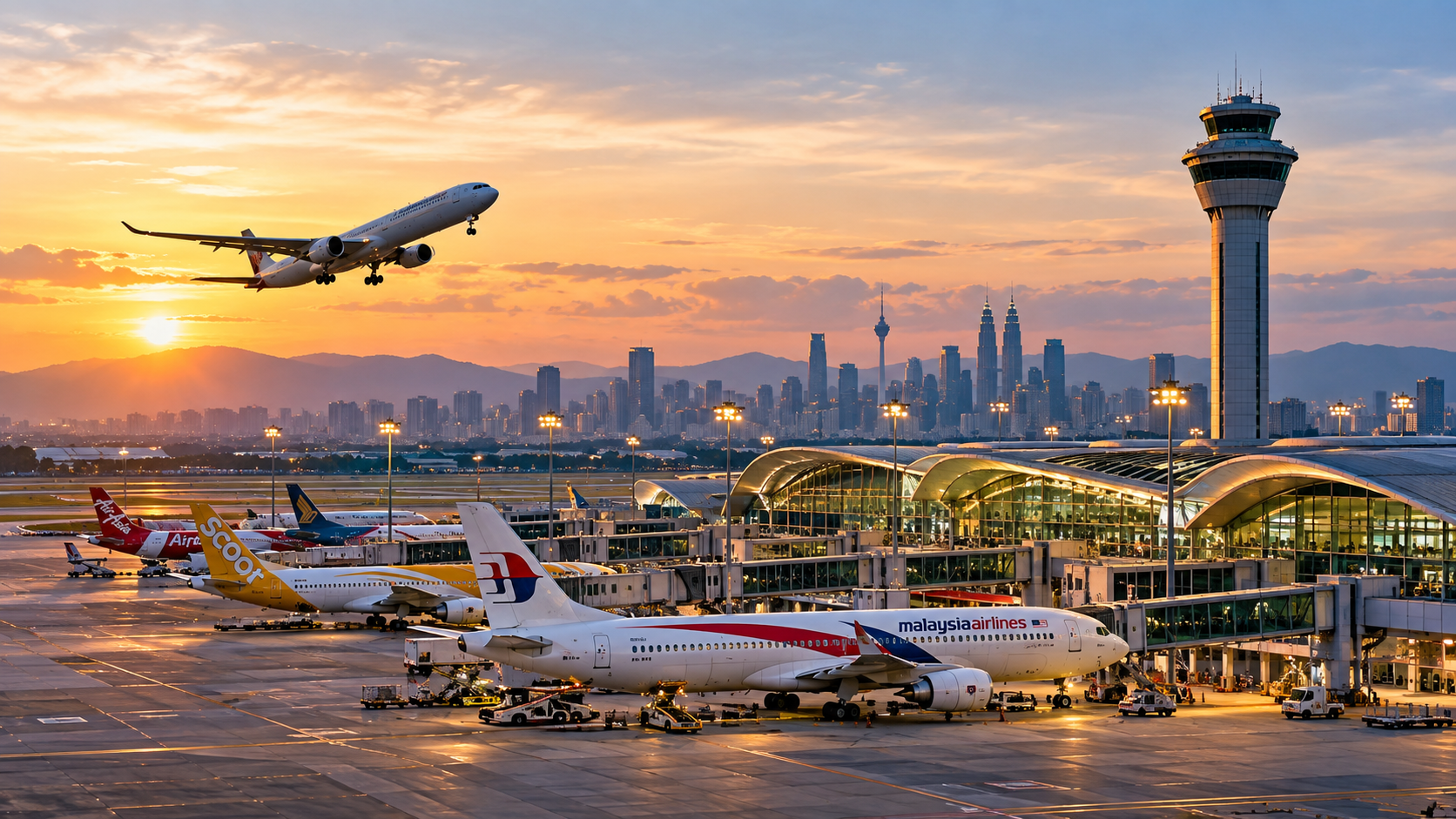
Aviation’s economic importance across Southeast Asia has been quantified in a major new study, with airports and the connectivity they enable supporting an estimated US$244 billion in GDP and 23.3 million jobs across ASEAN.
Airports and air connectivity have become major engines of Southeast Asia’s economy, supporting millions of jobs while facilitating tourism, trade, investment and economic integration across ASEAN.
A new study released by Airports Council International Asia-Pacific & Middle East (ACI APAC & MID) on Wednesday estimates that airports and the air connectivity they enable contributed US$244 billion to ASEAN’s GDP and supported 23.3 million jobs in 2025.
The study, Strengthening the ASEAN Single Aviation Market for Greater Connectivity within and beyond ASEAN, is described by ACI as the first comprehensive assessment of the economic contribution of airports across the region.
Its findings demonstrate how aviation’s importance extends far beyond airlines and airport terminals.
Airports Alone Generate US$55 Billion
Airport-related activity, including direct airport operations, supply-chain activity and spending generated by employees supported approximately 1.6 million jobs and US$55 billion in GDP across ASEAN during 2025.
The study estimates that this activity and aviation’s wider economic effects also generated approximately US$36 billion in government tax revenues.
The wider US$244 billion contribution incorporates the economic effects enabled by air connectivity, including tourism, trade, investment and productivity.
For Southeast Asia, those effects are particularly important because aviation connects a geographically dispersed region comprising major continental economies as well as thousands of islands.
Malaysia Among ASEAN’s Major Aviation Economies
Malaysia emerges prominently from the findings.
According to the study, Malaysia supported approximately 282,000 jobs from airport-related activity, placing it behind Vietnam at around 368,000 and Indonesia at approximately 335,000.
In GDP terms, Malaysia recorded the second-largest airport-related impact in ASEAN at approximately US$11 billion.
Singapore ranked first at approximately US$22 billion, while Thailand followed Malaysia at around US$7.7 billion.
The findings reinforce the economic importance of Malaysia’s airport network and international connectivity, particularly as the country seeks to strengthen its position in tourism, aviation services, aerospace and regional connectivity.
ASEAN Connectivity Has Expanded Dramatically
The study also illustrates how dramatically Southeast Asian aviation has expanded over the past two decades.
Direct air connectivity across ASEAN increased by approximately 358% between 2004 and 2025.
ACI associates those connectivity gains with around US$50.6 billion in GDP and six million jobs across the region.
Almost every ASEAN member state recorded at least a doubling in scheduled airline seat capacity during that period.
One of the most significant structural changes has been the expansion of low-cost aviation.
Low-cost carriers represented approximately 51% of intra-ASEAN airline seats in 2025, compared with only 29% in 2008.
That transformation has made air travel accessible to a much broader segment of Southeast Asia’s population while supporting the development of secondary destinations and new regional routes.
More Than 700 Million Airport Passengers
ASEAN airports handled more than 700 million passengers and almost nine million tonnes of cargo during 2025, according to the study.
International tourism represents another major component of aviation’s economic contribution.
Approximately 84.8 million international tourists arrived in ASEAN by air in 2025, generating an estimated US$127 billion in tourism expenditure.
That represented roughly two-thirds of total international tourism spending across ASEAN.
The figures illustrate why air connectivity has become particularly important to economies with substantial tourism sectors, including Malaysia, Thailand, Indonesia, Vietnam and Singapore.
ASEAN Could Unlock Another US$4.3 Billion
Despite the growth, ACI argues that the ASEAN Single Aviation Market has yet to reach its full potential.
Under an unconstrained scenario involving fuller implementation of aviation liberalisation, the study estimates ASEAN could generate almost six million additional intra-regional passengers.
That represents an approximately 11.6% increase over 2025 intra-ASEAN passenger traffic.
The additional connectivity could ultimately support almost 450,000 additional jobs and US$4.3 billion in additional GDP, according to the study.
ACI says remaining challenges include market access, traffic rights, connectivity to secondary cities, regulatory barriers and infrastructure capacity.
US$341 Billion Airport Investment Challenge
Perhaps the study’s most important finding for the future is the scale of infrastructure investment ASEAN aviation could require.
ACI forecasts that passenger traffic across the region will more than double during the next decade.
Approximately US$108 billion in airport investment could be required by 2036 to accommodate that growth.
A further US$233 billion could then be required between 2037 and 2056.
Together, ASEAN airports could therefore require approximately US$341 billion in infrastructure investment over the next 30 years.
Regional passenger traffic is ultimately projected to reach approximately 2.9 billion passengers.
That creates a significant challenge for governments and airport operators.
Liberalising airline markets can create demand, but airlines cannot fully exploit that opportunity if airports, terminals, runways, airspace and supporting infrastructure lack sufficient capacity.
Aviation as Economic Infrastructure
The study ultimately reinforces a wider shift in how airports are viewed.
Airports are no longer simply places where aircraft arrive and depart.
They function as economic infrastructure connecting businesses with markets, tourists with destinations, manufacturers with international supply chains and cities with investment opportunities.
That relationship is particularly pronounced in Southeast Asia.
ASEAN’s economic integration depends heavily on moving people and goods efficiently across national borders, while the region’s geography makes aviation essential to connecting many of its largest cities and island economies.
The challenge ahead will therefore be ensuring that infrastructure development keeps pace with demand.
For Malaysia and its ASEAN neighbours, the numbers suggest the economic stakes are substantial.
With aviation already supporting an estimated US$244 billion in regional GDP and 23.3 million jobs, the future competitiveness of Southeast Asian aviation will increasingly depend not simply on how many airlines operate — but on whether the region builds the airport capacity, regulatory environment and connectivity required for the next generation of growth.
MyAviation Magazine | Airports & ASEAN Aviation